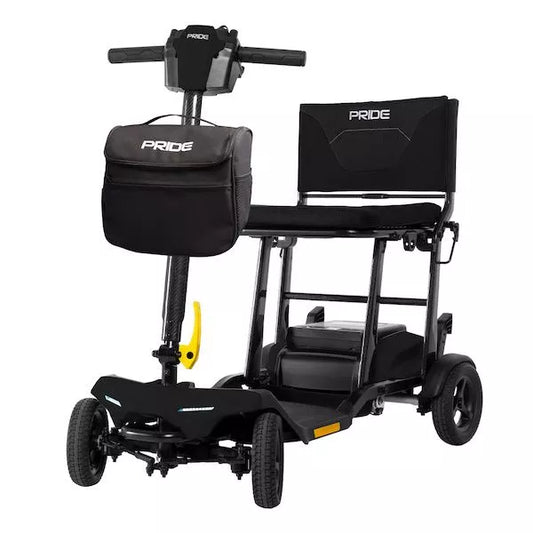
How to Transport a Mobility Scooter The Complete 2026 Guide

So, you've got your mobility scooter and you're enjoying the freedom it brings. But what happens when you need to go further than your own neighborhood? Getting your scooter from your home into your car and out to the world can feel like a huge hurdle, but it doesn't have to be.
The secret is finding the right method that works for your scooter, your vehicle, and your own physical comfort level. It could be as simple as breaking down a lightweight travel model for the trunk, using a ramp for your SUV, or getting a vehicle lift to do all the heavy work.
Your Quick Guide to Transporting a Mobility Scooter

The whole point of a mobility scooter is to open up your world, not to have that world end at your driveway. Taking your scooter with you—whether for a quick trip to the grocery store or a long-awaited family vacation—is what true independence is all about.
Let's walk through the most common ways people transport their scooters. We'll look at everything from simple manual loading to fully automated lifts so you can find the perfect fit for your life.
Finding Your Best Transport Method
When I talk to scooter owners, the first thing we figure out is the right transport solution. It almost always comes down to three things: the scooter's size and weight, the type of car you drive, and how comfortable you are with lifting.
-
Disassembly: This is the go-to for smaller, travel-friendly scooters. They're specifically designed to come apart into a few lighter pieces—usually the seat, the battery pack, and the frame. You can then lift each part into your trunk or backseat without straining yourself. A classic example is the Pride Go-Go Elite Traveller 2, which is known for its tool-free disassembly.
-
Ramps: If you have an SUV, van, or truck, a portable ramp can be a game-changer. It creates a simple slope so you can guide or drive the scooter directly into your vehicle. It's a fantastic middle-ground that takes the heavy lifting out of the equation. Options like the Guldmann Stepless Easy Fold Ramp offer a flexible and strong solution.
-
Vehicle Lifts: For heavier, full-sized scooters, or for anyone who wants a truly effortless solution, a vehicle lift is the ultimate answer. These powered systems are installed on or inside your vehicle and do all the work with the push of a button. The Lift 'N' Go Fully-Powered Carrier is an excellent example of a fully automated exterior lift.
Expert Tip: Before you do anything else, grab a tape measure and find your scooter's manual. Write down its exact length, width, height, and total weight. These two pieces of information will instantly tell you which transport options are actually possible for your vehicle.
To make it even easier, here's a quick comparison to help you see which option might be the best starting point for you.
Mobility Scooter Transport Methods At a Glance
| Transport Method | Best For | Pros | Cons |
|---|---|---|---|
| Disassembly | Lightweight, travel/folding scooters | Most affordable; Fits in most car trunks | Requires some lifting and assembly/disassembly each time |
| Ramps | Mid-size scooters; SUVs, vans, and trucks | Eliminates heavy lifting; Relatively affordable | Requires storage space for the ramp; Needs a gentle slope |
| Vehicle Lifts | All scooter types, especially heavy models | Completely effortless; Maximum safety and security | Highest initial cost; Requires professional installation |
This table should give you a solid idea of where to begin your search. The best choice is always the one that makes your life easier and safer.
Why Safe Transport Is So Important
Getting your scooter from point A to B securely isn't just a matter of convenience—it's about protecting your investment and, most importantly, ensuring your safety. This is a bigger deal than ever before. The global mobility scooter market was valued at USD 1.59 billion in 2025 and is expected to more than double, hitting USD 3.43 billion by 2034.
Here in North America, we account for a massive 44% of that market. While 70% of scooter users over 65 are out and about in their cars every week, a concerning number are risking damage. An estimated 40% face device damage from improper transport methods, leading to frustrating and expensive repairs that can cost anywhere from $500 to $1,000 a year.
Considering transport options before you buy is a smart move. Understanding the different types of scooters and transport accessories can help you pick a model that already fits your vehicle and lifestyle, saving you headaches down the road.
Getting Your Scooter Ready for the Road
Before you even think about lifting, folding, or loading your scooter, a little prep work can save you a world of frustration. Trust me, spending a few minutes now prevents those maddening moments later—like discovering your scooter is an inch too wide for the trunk, or worse, causing damage to your scooter or your car.
Think of this as your pre-flight check. It’s the single most important part of learning how to transport a mobility scooter safely.
First things first, you need to know your scooter's vital statistics. Get out a tape measure and have your owner's manual handy. This isn't just busywork; these numbers will dictate every option you have.
- Know Its Size: Measure the scooter’s total length, width, and height when it's fully assembled and ready to ride.
- Know Its Weight: Look up the total weight in the manual. This is the magic number you'll need to compare against a vehicle lift's capacity or to decide if you can even attempt to lift it yourself.
- Know Its 'Heaviest Piece' Weight: If your scooter comes apart, the manual will also list the weight of the heaviest single component. This is your real lifting weight and the number that matters most for manual loading.
I can't stress this enough: getting these measurements is the foundation of a successful trip. Finding out your scooter is two inches too tall for your SUV's cargo opening or 50 pounds over your lift's limit is a problem you want to solve in your driveway, not in a rainy parking lot.
The Smart Way to Lift: Take It Apart
Most of the travel-friendly scooters on the market today are brilliantly designed to be taken apart without any tools. This is a game-changer, breaking a heavy machine into a few light, manageable pieces that one person can often handle on their own. Models from the Pride Mobility Go-Go series are famous for this feature.
Breaking it down is usually a simple, repeatable process:
- The seat typically just lifts straight off its mounting post.
- Next, pull the battery pack out—it almost always has a built-in handle.
- Unhook the basket from the front tiller.
- Finally, a single lever or knob lets you separate the front (tiller and wheels) from the rear (motor and wheels) section of the frame.
Suddenly, what was a single 100-pound scooter is now four or five pieces, with the heaviest part often weighing a much more manageable 30-40 pounds. It’s a true back-saving strategy that opens up a world of transport options. A scooter like the Pride Go-Go Elite Traveller 2 is a classic example of a machine built specifically for this kind of easy disassembly.
Handling the Battery with Care
The battery is your scooter's power plant, and it needs a bit of special attention, especially since there are a couple of different types.
- Sealed Lead-Acid (SLA/AGM): These are the heavier, older-style batteries. They are very stable and non-spillable. If you're using a vehicle lift, you can usually just leave them in place. When taking the scooter apart, you’ll just need to unplug the cable and lift the battery box out.
- Lithium-ion: Lighter and more powerful, these are now standard in most new travel and folding scooters. They have very specific rules for air travel—you must remove the battery from the scooter and bring it into the plane's cabin with you.
No matter the type, always power down the scooter and pull the key out of the ignition before you touch the battery connectors. Once it's out, find a spot in your vehicle where it won't slide around or tip over. A damaged battery is not just an inconvenience; it can be a serious safety hazard.
Your Pre-Trip Preparation Checklist
Running through a quick checklist ensures you never miss a step. A consistent routine is the best way to make every trip a safe and easy one.
| Task Category | Action Item | Check |
|---|---|---|
| Measurements | Confirm scooter dimensions fit your vehicle or lift. | [ ] |
| Weight | Verify total weight is within lift capacity or manageable for manual lifting. | [ ] |
| Disassembly | Remove seat, basket, and other detachable parts as needed to reduce weight. | [ ] |
| Battery | Power off the scooter and remove the key before handling the battery. | [ ] |
| Battery | Disconnect and secure the battery pack according to its type (SLA vs. Lithium). | [ ] |
| Loose Items | Secure any personal items from the basket or tiller pouch. | [ ] |
| Tires | Check that tires are properly inflated for a smooth roll-up onto a ramp or lift. | [ ] |
Loading Your Scooter into a Car or SUV Manually
You don't need a specialized vehicle lift to take your mobility scooter on the road. With the right approach, you can absolutely get it into your personal car or SUV. This is a great option if you have a travel or folding scooter and are comfortable with a bit of hands-on work.
The easiest scenario involves an ultra-compact folding scooter. Many of these, like the popular Pride Mobility Go-Go Carbon, are designed specifically for this. They collapse into a single, suitcase-like unit in just a few seconds. From there, you simply fold it up and slide it into your trunk or onto the back seat. Easy.
For travel scooters that don't fold but come apart, the strategy is a little different but just as manageable. Instead of one heavy unit, you break it down into its main components—the seat, battery, rear motor assembly and frame. This turns an awkward, heavy lift into a few lighter, easier-to-handle pieces.
Lifting Smart to Protect Your Back
When you're lifting those pieces, how you do it matters. A lot. Trying to hoist a 30-40 pound scooter frame by bending at the waist is a surefire way to strain your back. Think of it like lifting any other heavy object.
- Get in close to the scooter part.
- Keep your back straight and bend at your knees.
- Grab a solid part of the frame for a firm grip.
- Use your powerful leg muscles to do the lifting, not your back. When you need to turn, pivot with your feet instead of twisting your waist.
Following these steps makes a huge difference and helps prevent injuries, which is key if you plan on transporting your scooter regularly.
Using Portable Ramps for a No-Lift Solution
If your scooter feels a bit too heavy to lift—even in pieces—or you'd just rather not risk it, a portable ramp is a fantastic tool. These are especially helpful for vehicles with a higher cargo floor, like SUVs, minivans, and trucks. The ramp creates a gentle incline, allowing you to simply roll the scooter right inside.
Choosing the right ramp is all about safety and creating a manageable angle. A ramp that’s too short for your vehicle will be dangerously steep. Look for designs like suitcase ramps, which fold in half for easy storage, or multi-fold ramps if you need a longer, more gradual slope. You can see a great example of how these work with the SUITCASE® Trifold AS Ramp by EZ-ACCESS®.
Important Takeaway: Before you buy, always check the ramp’s weight capacity. Make sure it can handle the weight of your scooter plus your own, especially if you plan on guiding it up from behind. And always make sure the ramp is positioned securely against your vehicle to prevent it from slipping.
Properly preparing your scooter for transport—measuring, disassembling, and handling the battery—is the foundation for a smooth trip.

As you can see, the work begins before you even start loading. Getting these details right sets you up for success.
Securing Everything for a Safe Drive
Once all the scooter parts are in your vehicle, the job isn't quite done. You need to make sure nothing can slide, roll, or fly around. A loose battery or tiller can become a real hazard during a sudden stop.
Use simple bungee cords or tie-down straps to anchor the main frame section to the cargo hooks in your trunk or cargo area. The lighter parts, like the seat and basket, can be placed securely in the footwells. It’s also a good idea to lay down an old blanket or towel first to protect both your car's interior and your scooter from scuffs and scratches.
This isn't just about being tidy; it's about protecting a valuable piece of equipment. With the mobility market growing and evolving, these are significant investments. Considering that a large percentage of mobility aid damages occur during transit, taking a few simple precautions is a smart move. For more on this growing need, you can check out the latest market insights from Mordor Intelligence.
Using Vehicle Lifts and Carriers for Effortless Transport

Let's be honest: if you're dealing with a mid-size or heavy-duty scooter, trying to lift it yourself is a non-starter. That's where a vehicle lift comes in. These powered systems are the single best investment for anyone who wants to get out more often without the physical strain.
A good lift turns what used to be a frustrating, multi-step chore into a simple, push-button process. It’s a complete game-changer, not just for the scooter user but for any family members or caregivers helping out. You can find all sorts of specialized lifts designed for this, but scooter-specific lifts are truly purpose-built for the job.
Outside Carriers: The Hitch-Mounted Solution
Hitch-mounted carriers are probably the most common setup you'll see on the road, and for good reason. They attach directly to your vehicle's trailer hitch, keeping your scooter secure on a platform behind your car, truck, or SUV. The biggest advantage? Your entire interior—all the seats and cargo space—remains completely free.
Operating one is usually a breeze. You just drive the scooter onto the platform, and with the press of a button, a motorized lift raises it to travel height. A self-locking retraction belt or a sturdy hold-down arm secures the scooter automatically, so you can skip the hassle of straps and get on your way fast.
The Harmar AL100 Universal Scooter Lift is a popular model you’ll see everywhere because its simple, robust design works with a huge range of scooters. The automatic hold-down arm is a fantastic feature that makes securing your scooter a foolproof, one-step process.
Key Consideration: Before buying an outside lift, you must check your vehicle's hitch class and tongue weight capacity. The tongue weight is the max downward force the hitch can safely handle. It has to be more than the combined weight of the lift and your scooter—no exceptions.
Inside Lifts: Hoisting for Protection
While hitch carriers are great, maybe you'd rather keep your scooter shielded from rain, snow, and road grime. If that's the case, an interior lift is your best bet. These are usually installed in the back of an SUV, minivan, or van. Most work like a small crane, with a motorized arm that hoists the scooter up and swings it into the cargo area.
This approach keeps your scooter clean, dry, and safely out of sight. It's also the perfect solution if your car doesn't have a trailer hitch or can't support the weight of an exterior carrier. You just connect the docking strap, press a button, and guide the scooter right into place.
A great example is the Bruno Curb-Sider. It’s known for being a workhorse, and its smart, compact design often leaves enough room for groceries or luggage right next to the scooter. With different models available for various scooter weights, it’s a powerful way to handle a heavy device.
How to Use a Vehicle Lift Correctly
Even the simplest lifts have a right way and a wrong way to be used. Following a few best practices ensures your scooter—and you—stay safe.
- Find Level Ground: Always park on a flat, stable surface before you even think about operating the lift. This prevents any unexpected rolling or tipping.
- Load with Care: Slowly drive your scooter onto the center of the platform. Take your time to align the wheels with any guides. No sudden movements.
- Engage the Lock: Use the main securing feature, whether it's an automated arm or a retraction belt. Listen for the click or check that it's fully engaged. This is what does 90% of the work.
- Add a Backup Strap (Optional but Smart): For long trips or bumpy roads, an extra ratchet strap provides excellent peace of mind. Hook it to a solid part of the scooter's frame (not the plastic shroud!) and a secure point on the lift.
This small bit of diligence makes a huge difference. Industry data shows that improper transport is behind a shocking number of scooter failures each year. But by using a quality outside carrier correctly, you can cut that risk dramatically.
Systems like the Lift 'N' Go Fully-Powered Carrier show just how easy this can be, automating nearly the entire process so one person can handle it all. They are built for safety and convenience, helping make every outing a success.
Navigating Air Travel and Long-Distance Shipping
Thinking about taking a trip? Your scooter can absolutely come with you, whether you're flying across the country or shipping it ahead for a long-term stay. A little bit of planning is all it takes to make sure your mobility device arrives safe and sound, ready for your next adventure.
Let's walk through what you need to know for both flying and long-distance shipping.
Flying with Your Mobility Scooter
Airlines deal with mobility scooters every single day, but they need your help to get it right. Your first move should always be a call to the airline, ideally at least 48 hours before your flight. This heads-up gives them time to prepare and lets you know about their specific procedures.
When you call, be ready with the details: your scooter's make, model, dimensions (length, width, height), and total weight. The most important detail, however, will be the battery.
- Battery type is crucial. If you have a scooter with lithium-ion batteries, you will almost certainly have to remove them and carry them on into the cabin with you.
- For scooters with sealed lead-acid (SLA) or other non-spillable batteries, they can usually stay in the scooter. The ground crew just needs to ensure the terminals are protected to prevent any short-circuiting.
It's also a smart idea to print out the battery's specification sheet and keep it with you. If any questions come up at the check-in counter or the gate, having that piece of paper can resolve things in seconds.
A Pro Tip for Protection: I always recommend attaching your own handling instructions directly to the scooter's tiller. Use a laminated sheet with large, bold text saying things like "HANDLE WITH CARE," "FRAGILE," or "DO NOT LIFT BY PLASTIC PARTS." This simple visual cue can make a huge difference in how your scooter is treated.
Some scooters are just built for the jet-set life. The Pride Mobility Go-Go Carbon Folding Mobility Scooter, for example, is a popular choice because it folds into a compact shape like a piece of luggage. It's FAA-approved and makes gate-checking incredibly simple.
Shipping Your Scooter Long-Distance
For a longer trip or if you own a larger, heavy-duty scooter, shipping it ahead of time might be the best option. Imagine arriving at your destination with your scooter already there, fully charged and waiting for you. It's a great way to take the stress out of travel day.
To do this, you'll need to prepare your scooter for a freight carrier. This means securing it in a crate or a sturdy, well-packed box to keep it from moving around during transit. You can often hire professional packing services, or if you're handy, build a simple plywood crate to keep it completely immobilized.
If you need to get your scooter somewhere internationally and on a tight schedule, you can look into specialized air freight options. These services are pros at handling valuable and oversized items.
For domestic shipping, getting familiar with how a company operates is key. A good starting point is to see how the professionals do it. You can learn a lot by reviewing our own shipping policy and procedures to understand the process from start to finish.
Your Top Questions About Transporting a Scooter, Answered
Once you start thinking about how to take your scooter on the road, a whole new set of questions usually comes up. We hear them all the time from customers trying to figure out the final details, so we’ve gathered the most common ones right here to give you clear, practical answers.
Can Any Car Be Fitted with a Mobility Scooter Lift?
It's a common misconception that any lift can go on any car. The reality is, it all comes down to your vehicle's specific capabilities.
For an outside, hitch-mounted lift, the absolute most important number you need to know is your vehicle's tongue weight capacity. You can find this in your car's manual, and it tells you the maximum downward force the hitch can safely support. The lift's own weight plus your scooter's weight can't go over that limit.
Lighter exterior models, like the Harmar AL100, are often a great match for sedans and small SUVs that have a Class II or III hitch.
When you're looking at an interior lift, the game changes from weight to space. You'll need enough cargo height and depth for the hoist and the scooter—think minivans, full-size SUVs, or some crossovers.
Pro Tip: Before you even start shopping for a lift, check your car's manual for its tongue weight and hitch class. Matching this to the lift's specifications is non-negotiable. It’s the only way to keep both your vehicle and your scooter safe from damage.
Do I Have to Remove the Battery for Transport?
Whether you need to take the battery out really hinges on how you're moving your scooter and where you're going.
If you're disassembling the scooter and lifting the parts by hand, definitely remove the battery. This makes the main frame significantly lighter and much more manageable to lift into a car.
On the other hand, if you’re using a vehicle lift or a carrier, you can almost always leave the battery right where it is. Those systems are built to handle the scooter’s full operational weight.
Air travel is the major exception where the rules are strict. For any flight, you must remove the battery. Airlines require lithium-ion batteries to be removed and carried with you into the cabin. For non-spillable sealed lead-acid (SLA) types, they need to be properly secured in the scooter to prevent any chance of a short-circuit. It's always a good idea to call your airline and confirm their latest policies well ahead of your trip.
What Is the Easiest Type of Scooter to Transport?
Hands down, the easiest scooters to move around are the ones specifically built for it: folding and travel models. Each has a slightly different approach that's perfect for people who are always on the move.
- Folding Scooters: Models like the Pride Mobility Go-Go Carbon Folding Mobility Scooter are engineered to fold down into a single, compact unit that you can pull along like a suitcase. This design is fantastic for popping into a car trunk and a real game-changer for air travel.
- Travel Scooters: These are designed to be taken apart quickly without any tools. A scooter from the Pride Go-Go Elite Traveller 2 series, for instance, breaks down into four or five lightweight sections. This makes it very easy for one person to manage, loading it into a vehicle piece by piece.
For those who want ultimate convenience without a lift, a small, dedicated trailer can be a brilliant solution. You can see how a Scoota-Trailer for a scooter or powerchair can completely simplify getting your scooter from point A to B.
How Do I Protect My Scooter from Damage During Transport?
A little bit of prep goes a long way in keeping your scooter looking and working like new. Your first line of defense is always a secure tie-down. When using a vehicle lift, make sure you use high-quality straps to stop it from rattling and shifting around, which can cause scratches and wear on components.
If you're loading disassembled parts into your car, just toss some old blankets or towels between them and the car's interior. This simple trick prevents scrapes and dings on both your scooter's body and your vehicle's trim.
For air travel, add some extra protection. Bubble wrap or foam padding around sensitive parts like the tiller, control panel, or joystick is a smart move. You can also help baggage handlers by attaching large, easy-to-read signs like "Fragile," "This Side Up," or "Do Not Lift by Tiller." And one of the best things you can do? Snap a few photos of your scooter's condition right before you hand it over.
At Top Mobility, we're here to help you find the perfect mobility solution and the best way to take it with you. Explore our full range of scooters, powerchairs, and vehicle lifts to regain your freedom on the go. Discover your ideal mobility solution today at TopMobility.com.
Refined using the Outrank app