Different Kinds of Wheelchairs: A Guide to Finding Your Perfect Mobility Match

Choosing the right wheelchair can absolutely change your life, but figuring out where to even start is often the hardest part. The number of options can feel overwhelming. The real goal is to find a chair that matches your physical needs, your lifestyle, and the places you go every day. This guide will walk you through the different kinds of wheelchairs, from straightforward manual chairs to sophisticated all-terrain power models.
Finding Your Perfect Mobility Match
Think of this less like a purchase and more like getting fitted for a crucial piece of equipment. You're looking for the right tool for the job—one that delivers the comfort, support, and mobility you need to live your life fully. This roadmap will help you explore each type so you can feel confident in your choice.
A great first question to ask is: will you be propelling the chair yourself, or will a caregiver be pushing it most of the time?

This simple flowchart shows how that one question can immediately point you in the right direction, either toward a transport chair for assistance or a manual chair for self-propulsion.
To give you a quick overview of the main categories we'll be covering, here’s a simple comparison table.
Wheelchair Types at a Glance
| Wheelchair Type | Best For | Key Advantage |
|---|---|---|
| Transport Chair | Short trips with a caregiver | Lightweight and easy to transport |
| Manual Chair | Active users who can self-propel | Independence and physical engagement |
| Power Chair | Users with limited upper body strength | Effortless mobility over long distances |
| Lightweight Chair | Frequent travel and lifting | Easy to fold, lift, and store |
| Bariatric Chair | Larger individuals | Higher weight capacity and durability |
| All-Terrain Chair | Outdoor and rough surface use | Stability and power on varied ground |
This table is just a starting point, of course. The details are what really matter when it comes to finding the perfect fit for you.
Getting Started with the Basics
Before diving into the models, take a moment for an honest look at your day-to-day life and physical capabilities. This groundwork makes every other decision much clearer.
- Daily Routine: Where will you use the chair most? Are you mostly at home, or are you constantly out and about for work, errands, and social events? Your activity level will dictate things like durability and battery life needs.
- Home Environment: Grab a tape measure and check your narrowest doorways and hallways. This one simple step can save a lot of frustration and instantly rule out chairs that just won't fit.
- Transportation: How will the chair get from place to place? If you or a caregiver will be lifting it into a vehicle, its folded size and overall weight become top priorities.
- Caregiver Assistance: If a friend, partner, or family member will be helping, their ability to push, lift, and manage the chair is just as important as your own needs.
A wheelchair doesn't define you; it empowers you. The right one becomes an extension of your own will, letting you save your energy for the people and activities you love.
This initial assessment prepares you to look at the different categories with a much sharper eye. As you explore ways to improve independence, remember that other tools can also help. For instance, finding one of the best lift chairs for seniors can make a world of difference for comfort and safety at home.
Ultimately, you're looking for a mobility tool that feels like a natural part of your life. Now that you have this foundation, you're ready to explore the specific options in our complete collection of manual wheelchairs and power wheelchairs. Let's begin with the most common types.
Getting to Grips with Manual and Transport Wheelchairs
When most people think of a wheelchair, the image that comes to mind is almost always a manual wheelchair. These are the classic chairs you see everywhere, forming the bedrock of personal mobility for millions. Their straightforward design and reliability have made them a go-to choice for everything from short-term recovery to full-time, independent living.
This category really breaks down into two distinct types, and the main difference is simple: who's doing the pushing?
Standard Manual Wheelchairs: The Key to Independence
If you have the upper body strength to get around on your own, a standard manual wheelchair is your ticket to freedom. These chairs are built with large rear wheels and easy-to-grip handrims, allowing you to propel yourself. It’s not just about movement; it’s about maintaining control and independence, which is a powerful feeling.
These chairs are true workhorses, known for their durable construction and simple mechanics. There isn't much that can go wrong with them, making them incredibly reliable for daily use. Most come with practical features that make life easier, such as:
- Swing-Away Footrests: These get out of the way, making it much safer and simpler to sit down or stand up.
- Padded Armrests: Whether full-length or shorter desk-length, they provide crucial support and comfort.
- Folding Frames: Nearly all standard models fold for storage, though they can be a bit heavier to lift.
Manual wheelchairs have been the cornerstone of mobility for decades. In fact, they accounted for a massive 49.3% share of the entire wheelchair market in 2023, a testament to their enduring value. You can read more about their market dominance in the Global Wheelchair Market News. This isn't just a statistic; it shows how vital these chairs are for meeting essential mobility needs across the globe.
Transport Chairs: Built for Portability and Assistance
On the other side, you have transport chairs. These are specifically designed to be pushed by a friend, family member, or caregiver. You'll notice they have four small wheels instead of two large ones, which immediately makes them lighter and more compact.
The core difference comes down to the wheels: large wheels for self-propulsion (manual) versus small wheels for caregiver assistance (transport). Choosing the right one depends on balancing user independence with caregiver convenience.
Because they don’t need the large, heavy propulsion wheels, transport chairs are incredibly lightweight. This portability doesn't mean you have to sacrifice comfort. Models like the FEATHER are designed with ergonomic backrests to provide excellent postural support for the user. You can learn more about the FEATHER Transport Wheelchair here. For anyone who will always have a companion for outings, a transport chair is often the perfect, hassle-free solution.
Exploring the Freedom of Power Wheelchairs
Sometimes, a manual wheelchair just isn't practical. Whether it's due to limited upper body strength, low endurance, or chronic pain, self-propelling isn't always a viable long-term solution. That’s where power wheelchairs come in, completely changing the game for personal mobility.
Think of it this way: if a manual chair is like a bicycle, a power chair is your car. It’s built to conserve your energy, letting you focus on where you’re going, not on the physical effort of getting there.

Making the switch to a power chair can open up your world in incredible ways. Instead of relying on your arms, a motorized base and a simple joystick controller do all the heavy lifting. It's no surprise that this technology is driving major growth in the mobility sector. The global wheelchair market was valued at USD 5.58 billion in 2025 and is on track to hit USD 13.14 billion by 2034, largely thanks to an aging population and a greater demand for independent mobility. You can discover more wheelchair market insights on fortunebusinessinsights.com.
Mid Wheel Drive The All-Around Performer
When you start looking at power chairs, you'll find the mid-wheel drive (MWD) model is often the most popular and versatile option out there. The design is simple but brilliant: two large drive wheels are positioned directly under your center of gravity, with smaller caster wheels in the front and back for stability.
Think of a mid-wheel drive chair like a zero-turn lawn mower. Its ability to pivot in place gives it an incredibly tight turning radius, making it feel intuitive and natural to control.
This setup gives MWD chairs a true 360-degree turning capability, meaning they can literally spin in place. This is a huge advantage for navigating the real world, from tight kitchen corners and narrow hallways to busy cafes. A perfect example is the Pride Jazzy EVO 613 w/ ATX Suspension, which couples this maneuverability with a sleek frame, making it a fantastic choice for both home and out-and-about use.
Front Wheel Drive The Obstacle Climber
Now, picture a rugged 4x4 vehicle that can confidently crawl over bumps and uneven terrain. That's the best way to understand the strength of a front-wheel drive (FWD) power chair. The large drive wheels are placed at the very front of the base, allowing the chair to pull itself up and over small obstacles with ease.
This makes FWD models especially skilled at handling everyday challenges like:
- Doorway thresholds
- Cracked or uneven sidewalks
- The transition from a hard floor to a thick rug
Another neat benefit is that the design lets you pull up very close to desks and tables, since there are no front casters to get in the way. The Merits P322A Vision is an excellent example of a FWD chair that excels at clearing small barriers, making it a go-to for older homes or anywhere the ground isn't perfectly smooth.
Rear Wheel Drive The Outdoor Cruiser
Last but not least, we have the rear-wheel drive (RWD) power chair. This one is the classic sedan of the wheelchair world—it’s engineered for stability and smooth performance, especially when you're moving straight ahead at a good clip. With its drive wheels at the back, it delivers a powerful and confident push from behind.
This layout is perfect for anyone who spends a lot of time outdoors and needs to cover more ground. RWD chairs are known for their excellent tracking, which just means they hold a straight line incredibly well on sidewalks, in parks, or across large campuses. The Merits P312A Dualer is a great example of a sturdy RWD chair built for durability and reliable outdoor performance. Its turning circle is the widest of the three types, but for pure power and stability over distances, it can't be beat. Also allowing the user to rotate seating 180 degrees to face the other direction without maneuvering the unit.
Of course, the drive system is just one piece of the puzzle. Power wheelchairs also come in specialized formats, like lightweight folding models that are perfect for travel. Check out our guide on the best lightweight power wheelchairs to see how portability and power can go hand in hand.
Finding a Specialized Wheelchair for Your Lifestyle
Standard manual and power wheelchairs cover the basics for many people, but your life isn't "standard." Your daily routine, specific health needs, or the places you want to go might call for something more. That's where a whole world of specialized wheelchairs opens up, with models engineered for everything from rugged outdoor adventures to competitive sports.
These chairs aren't just slightly tweaked versions of a basic model. They are designed from the ground up for a specific purpose. Think of it like this: a family sedan is perfect for getting around town, but you wouldn't take it off-roading. For that, you’d want a truck with a beefed-up frame and all-terrain tires. The same logic applies to finding the right wheelchair.

Bariatric Wheelchairs for Heavy-Duty Support
For larger individuals, having a chair that’s both safe and durable is non-negotiable. A bariatric or heavy-duty wheelchair is built to provide that extra strength and a truly comfortable fit, giving you total stability and peace of mind. These chairs aren't just wider—their entire structure is stronger.
You'll typically find features like:
- Reinforced Steel Frames: They use thicker tubing and often have dual cross-braces to handle higher weight capacities safely.
- Heavy-Duty Components: Everything from the motors and wheels to the upholstery is designed to withstand greater stress and last longer.
- Generous Seat Dimensions: The seats are wider and deeper, which is crucial for a proper fit that reduces pressure points and encourages better posture.
The Pride Mobility Jazzy Elite HD is a great example of a power chair built for this job. It has a robust frame that can support up to 450 lbs and a powerful drive system, so it delivers reliable performance without feeling bulky or hard to handle.
All-Terrain Wheelchairs for Outdoor Adventurers
If you love getting off the beaten path, an all-terrain wheelchair is your ticket to exploring the great outdoors. These tough chairs are made to tackle surfaces that would bring a standard wheelchair to a halt, like gravel paths, bumpy fields, and uneven nature trails.
An all-terrain chair is like a 4x4 for personal mobility. Its large, knobby tires and powerful motor give you the traction and stability needed to confidently navigate nature.
These models almost always feature large, air-filled tires, better suspension systems to soak up bumps, and strong motors to power up inclines. They can completely change the game for anyone who wants to go camping, hiking, or just enjoy a day in the park without limitations. If you're looking for the right option for the outdoors, check out the Sunrise Medical X8 All-Terrain 4x4 Power Wheelchair, which is designed to be tackle all forms of tough terrain.
Folding and Travel Power Wheelchairs for Portability
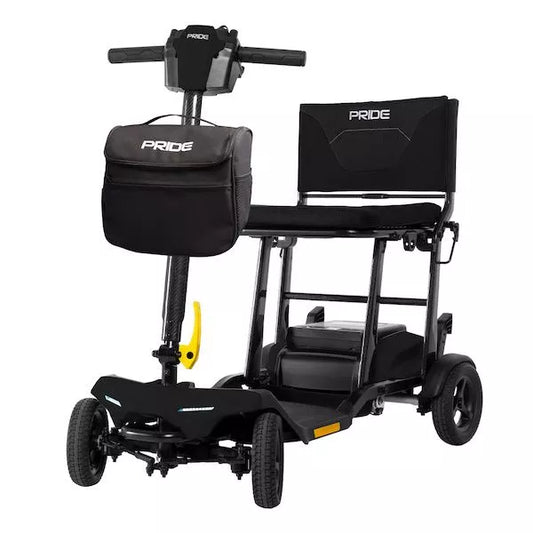
For those who travel often, balancing the independence of a power chair with the need for portability has always been a challenge. Folding and travel power wheelchairs are the perfect solution. They give you a motorized base in a lightweight, compact frame that folds down easily for transport.
A perfect illustration is the Geo Cruiser LX. It folds in just a few seconds into a small package that fits in the trunk of most cars. This makes it an amazing companion for everything from running errands to getting on a plane, so you have reliable power no matter where you go.
Active and Sports Wheelchairs for Athletic Performance
For anyone with a competitive streak, active and sports wheelchairs are high-performance machines built for one thing: peak athleticism. These are a far cry from everyday chairs. They are custom-built for the agility, speed, and toughness needed for sports like basketball, tennis, and racing. Key features usually include an ultralight rigid frame, angled (cambered) wheels for stability during sharp turns, and a very low center of gravity.
This specialized category shows just how far wheelchair design has come, turning a mobility aid into a piece of elite athletic equipment. In fact, the active wheelchair market was valued at USD 1,404.43 million in 2021 and is expected to grow to USD 2,860.74 million by 2033, which points to a huge demand for performance-focused mobility. You can read more research on the wheelchair market from econmarketresearch.com.
Advanced Seating for Better Health and Comfort
A great wheelchair does more than just get you from point A to point B. The most significant breakthroughs in wheelchair technology have come from advanced seating systems that actively protect your health, boost your comfort, and help you engage more fully with the world around you.
These features transform a mobility device into a dynamic tool for daily living and well-being. Today's power chairs can shift, lift, and reposition you in ways that make a huge difference in how you feel at the end of the day.
Promoting Health Through Pressure Relief
If you spend a good portion of your day in a wheelchair, managing skin pressure isn't just a comfort issue—it's a critical part of your health. Two key features, Tilt-in-Space and Reclining, are designed specifically to help by letting you change your position and shift your body weight.
A Reclining function is easy to picture; it works just like your favorite living room recliner. The backrest angles open, letting you lie back. While this is fantastic for a good stretch or a quick rest, it can sometimes cause you to slide down in the seat, which isn't ideal.
Tilt-in-Space is a more sophisticated approach to pressure relief. Imagine leaning your entire office chair backward while keeping the angle between your back and your legs exactly the same. That’s tilt. The whole seating system rotates as one unit, moving the pressure off your sit bones and onto the broader surface of your back and shoulders. The mechanics are somewhat similar to what you might find in a lift chair, which also uses powered mechanisms for repositioning.
Tilting is a powerful tool for health maintenance. It effectively offloads pressure, which is vital for preventing the development of painful pressure sores and improving circulation throughout the day.
Many advanced chairs actually combine both tilt and recline, giving you the best of both worlds for a complete positioning solution. This technology isn't just for power chairs, either; you can find it in models like the Karman Tilt-in-Space Manual Wheelchair.
Interacting with the World at Eye Level
The simple act of changing your vertical height can have a massive impact on your physical health and your social life. Standing wheelchairs and models with seat elevation hand you this power, opening up a new world of independence.
-
Standing Wheelchairs: These incredible chairs do exactly what the name implies: they move you from sitting to a full, supported stand. The health benefits are enormous, helping with bone density, organ function, and circulation while providing a much-needed stretch. Just as importantly, they let you meet the world—and the people in it—at eye level.
-
Seat Elevating Options: A seat elevator simply lifts the entire chair seat straight up. The Pride Jazzy Air 2, for instance, has a 12-inch lift you can use even while you’re driving. This feature might seem small, but it's genuinely life-changing. It's the freedom to reach a high shelf in the kitchen, join a conversation at a high-top table, or simply speak to someone face-to-face.
How to Customize Your Wheelchair for a Perfect Fit

Picking the right category of wheelchair is a great start, but the real magic happens in the fitting. This is where a standard piece of equipment becomes truly your chair. A one-size-fits-all approach just doesn't cut it when it comes to mobility, and getting the customization right is what unlocks day-long comfort, proper posture, and better overall function.
Think of it like getting a high-quality suit tailored. Sure, you can wear one off the rack, but a tailored suit moves with you and feels like it was made just for you. Your wheelchair is no different—a proper fit has a massive impact on your health and independence.
The Foundation of a Perfect Fit
Before we even think about accessories, we have to get the core dimensions of the chair itself dialed in. These three measurements are the bedrock of a good fit, ensuring your body is supported correctly from the moment you sit down.
- Seat Width: This is a balancing act. The seat needs to be wide enough to avoid painful rubbing on your hips, but still narrow enough that you can easily reach the wheels to push yourself.
- Seat Depth: A correct seat depth will support your entire thigh without digging into the back of your knees, which is critical for maintaining good circulation.
- Seat Height: The right height lets your feet rest flat on the footplates with your thighs mostly level. This creates a stable and comfortable base.
A well-fitted wheelchair becomes a seamless extension of your body. It reduces fatigue, minimizes health risks, and allows you to put your energy toward living your life, not fighting your equipment.
Enhancing Function with Key Accessories
Once the foundational fit is set, you can start adding accessories that make a real difference in your daily life. These aren’t just nice-to-haves; many are crucial for your health and safety, turning a good chair into your perfect mobility partner.
Essential Health and Comfort Accessories:
- Pressure Relief Cushions: For anyone who spends significant time in a chair, this is absolutely non-negotiable. A high-quality option like a Jay Pressure Relief Cushion works by redistributing your weight to help prevent painful pressure sores while improving stability.
Practical Add-Ons for Daily Life:
Beyond the clinical essentials, plenty of accessories can give your independence a serious boost. A simple but effective Power Wheelchair Cup Holder keeps a drink right where you need it, while a durable Power Wheelchair & Scooter Armrest Bag offers a secure spot for your phone, keys, and wallet. These small touches streamline your routine, helping you stay organized and self-sufficient.
By taking the time to nail the fit and choose the right extras from our collection at Top Mobility, you're not just buying a wheelchair. You’re building a personalized tool that supports your health, comfort, and active life.
A Few Common Questions We Hear About Wheelchairs
When you start looking for the right wheelchair, a lot of questions come up. We get it. Let's tackle some of the most common ones we hear from customers every day to help clear things up.
What Is the Main Difference Between a Transport Chair and a Manual Wheelchair?
It all comes down to who's doing the pushing. A standard manual wheelchair has those big wheels in the back with handrims for a reason—they put you in control. If you have the upper body strength to propel yourself, a manual chair gives you that independence.
A transport chair, on the other hand, is designed to be pushed by a friend, family member, or caregiver. It has four smaller wheels, is much lighter, and folds up more compactly. This makes it a fantastic option for quick trips, doctor's appointments, and travel where someone will always be there to help you get around.
How Do I Choose Between a Mid Wheel, Front Wheel, or Rear Wheel Drive Power Chair?
Where you plan to use your chair most is the biggest factor here. Each drive system has its own personality and excels in different environments.
-
Mid-Wheel Drive (MWD): These are the masters of indoor spaces. With a drive wheel positioned directly under you, they can often turn 360 degrees on their own footprint. This incredible agility, seen in models like the Pride Mobility Jazzy EVO 613, is a lifesaver for navigating tight hallways, kitchens, and crowded rooms.
-
Front-Wheel Drive (FWD): Think of these as the obstacle climbers. Having the drive wheels at the front gives the chair the power to pull the rest of the frame up and over small obstacles like uneven thresholds or low curbs. It's a great setup for handling varied indoor terrain with confidence.
-
Rear-Wheel Drive (RWD): This is your classic outdoor workhorse. With the drive wheels in the back, RWD chairs offer fantastic power and tracking in a straight line, especially at higher speeds. They feel incredibly stable and are perfect for covering longer distances across a park, campus, or neighborhood.
Can I Use an All Terrain Wheelchair Indoors?
You can, but it's probably not going to be a great experience. All-terrain models are built big and tough for a reason. Their large, knobby tires are made for gripping uneven ground like grass, gravel, and packed dirt.
That rugged build makes them a challenge indoors. They're often too wide for standard doorways and have a much larger turning radius, making it tough to get around furniture and through narrow halls. Most people who own a chair like the manual TerraWheels All-Terrain Wheelchair have it as a second "fun" chair for adventures, while relying on a standard model for daily life inside.
A professional fitting is non-negotiable, especially if you'll be in your chair for many hours a day. While online guides are a great starting point, nothing replaces an expert evaluation. A proper fit ensures your posture is supported and you're comfortable and safe. An improper fit can lead to real problems, from pressure sores to chronic pain.
At Top Mobility, our mission is to match you with the mobility equipment that truly fits your life. Take a look at our complete collection of wheelchairs and accessories to find your path to greater freedom.