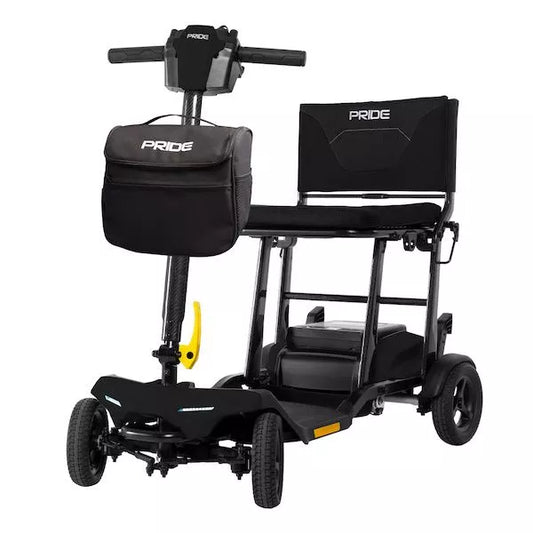
A Complete Guide to Mobility Scooter Parts

Think of your mobility scooter like you would your car. It’s an incredible machine that gives you freedom and independence, but just like a car, it has parts that wear out over time. To keep it running smoothly, you need to know a little bit about what’s going on under the hood. Understanding the role of each mobility scooter part is the secret to keeping your device reliable for years to come.
Keeping Your Independence in Motion
This guide is designed to give you that confidence. We're going to break down your scooter's core systems, from the electrical components that give it life to the tires that connect you to the road. The goal isn't to turn you into a master mechanic overnight, but to help you spot the early signs of wear and know exactly what's needed when a replacement is due.
With this knowledge, you can ensure your scooter is always ready to go when you are, so your daily plans are never put on hold. We’ll also walk you through how to pinpoint the exact parts you need using trusted resources, like the extensive inventory right here at Top Mobility.
Understanding the Importance of Quality Parts
A mobility scooter is a finely tuned system where every component has to work in sync. If one part starts to fail, it can create a domino effect that impacts the scooter's overall performance and, more importantly, its safety. For instance, a weak battery doesn't just mean you can't travel as far; it puts extra strain on the motor and controller, potentially causing them to wear out faster.
Investing in high-quality, compatible parts is the best way to protect your scooter's longevity and ensure it operates safely and reliably every time you leave the house.
It's no surprise that the demand for reliable components is booming. The global mobility scooter market was valued at USD 2.54 billion and is expected to climb to USD 3.63 billion by 2031. This explosive growth shows just how many people rely on these machines, highlighting the critical need for dependable replacement parts to keep millions of scooters running safely.
A Quick Look at the Core Parts
Every part of your scooter plays a crucial role in its operation, comfort, and safety. Before we dive deep into each one, here's a quick reference table to help you get familiar with the main components and what they do.
Core Mobility Scooter Parts and Their Roles
| Part Category | Primary Function | Importance |
|---|---|---|
| Batteries & Chargers | Provides the electrical energy to power the entire scooter. | Determines your travel range, speed, and overall performance. A healthy battery is essential. |
| Motors & Controllers | The motor propels the scooter, while the controller manages its speed and direction. | This is the "engine" and "brain" of your scooter. Their health dictates power and responsiveness. |
| Tires & Wheels | Your scooter's connection to the ground, providing traction and shock absorption. | Crucial for ride stability, comfort, and safety on different terrains. |
| Seats & Armrests | Provides support and comfort for the user during operation. | Essential for preventing fatigue and ensuring a comfortable, stable ride, especially on longer trips. |
| Frames & Shrouds | The structural skeleton and protective outer body of the scooter. | The frame ensures structural integrity, while shrouds protect internal components from damage. |
| Tillers & Controls | The steering column and handlebar assembly, housing all user controls. | This is your command center for steering, acceleration, and braking. It must be fully functional. |
Having a basic grasp of these systems makes everything from daily operation to maintenance much easier. As you get more comfortable with how your scooter works, even tasks like preparing it for travel become less daunting. In fact, knowing your scooter inside and out is a big help when you need to take it with you, as we cover in our guide on how to transport a mobility scooter.
The Power Core of Your Scooter
Think of your scooter’s electrical system as its heart and central nervous system. The battery is the lifeblood, providing the raw energy, while other components direct that power to get you where you need to go. When you understand how these parts work together, you're not just a rider—you're an owner who can spot trouble before it sidelines you.
Not sure if you have a failing part or just need a bit of routine maintenance? This flowchart can help you figure out the best next step.

As you can see, most issues boil down to one of two paths: either a specific part needs to be identified and replaced, or some simple upkeep is in order. Knowing which path to take is half the battle.
Your Scooter's Energy Source: The Battery
Your batteries are, without a doubt, the most critical factor in your scooter’s daily range and performance. Most mobility scooters run on a 24-volt system, which is usually created by linking two 12-volt batteries together. Getting the right type is essential, as each has its own trade-offs in terms of performance, lifespan, and care.
- AGM (Absorbent Glass Mat): These are the workhorses of the scooter world. They're sealed, completely spill-proof, and offer great, reliable performance for day-to-day use. For most people, they are the go-to, cost-effective choice.
- Gel: Gel batteries are champs when it comes to deep-cycle use. This means they handle being deeply drained and recharged better than AGM batteries. They often last longer, but you'll pay a bit more for that durability.
- Lithium-ion: This is the premium option. Lithium-ion batteries are incredibly lightweight, charge up much faster, and can last for years longer than their lead-acid cousins. While the initial cost is higher, their long life and convenience often make them worth it in the long run.
A solid, all-around replacement for many popular travel mobility scooter models is the Interstate Batteries SLA1104 12V 12AH. It's a dependable AGM battery that hits that sweet spot between power and price. You can also get more life out of any battery with a few good habits, like trying not to run it completely dead and storing your scooter somewhere with stable temperatures.
Want to get into the nitty-gritty? Our complete guide on scooter battery replacement and maintenance has all the details.
Keeping the Power Flowing: The Charger
Your scooter’s charger is every bit as important as the batteries it feeds. Using the wrong charger—or a faulty one—is a fast track to damaging your batteries and cutting their lifespan short. You'll generally run into two types.
On-Board Chargers: These are built right into the scooter's frame. All you have to do is plug a standard power cord directly into the scooter's charging port. They're incredibly convenient, but if one fails, replacing it can be a more involved job.
Off-Board Chargers: This is the most common style. It’s a separate box that you connect between the wall outlet and your scooter. They're simple to replace if something goes wrong and are easy to upgrade. A quality off-board unit like the Challenger Mobility 24V 5A SLA Charger delivers a steady, reliable charge and usually has indicator lights to let you know what's happening.
If your scooter isn't charging, the charger itself is a common suspect. A quick test is to plug it into a working wall outlet and then into the scooter. If the indicator lights on the charger don't come on at all, the charger has likely failed. Just make sure you’ve checked that the outlet works and all connections are snug first!
The Brains and Nerves of the Operation
Power from the battery is just potential. To turn it into controlled movement, you need a few other critical mobility scooter parts that act as the brains and nervous system of your machine.
The Controller
If the battery is the heart, the controller is the brain. This electronic box takes the signals from your throttle and tells the motor exactly how much power to draw from the batteries. Is your scooter suddenly jerky, moving at inconsistent speeds, or refusing to go at all even with a full battery? A failing controller could be the culprit. To really geek out on how these work, you can find detailed information on electric motor control systems.
The Throttle Potentiometer
This is the part you physically interact with to control your speed. It’s the lever assembly, often called a "wig-wag," that you push for forward and reverse. It's your scooter's gas pedal. When the potentiometer inside wears out, you might experience jerky acceleration or a "dead spot" where the scooter doesn't respond right away.
The Ignition and Key Switch
This one’s pretty straightforward—it’s what you use to turn the scooter on and off. But if you turn the key and get nothing—no battery gauge flicker, no lights, just silence—the problem could be a few things. It might be a completely dead battery, a tripped circuit breaker, or a faulty ignition switch that's failing to complete the circuit.
Understanding Your Scooter's Drivetrain
If the battery is the heart of your scooter, the drivetrain is the muscle. This is the system that takes all that electrical juice and turns it into real-world movement, getting you where you need to go. Keeping these hardworking parts in good shape is non-negotiable for a reliable ride, so let’s get to know the components that make it all happen.

The Engine Room: Motor and Transaxle
Deep inside your scooter is the motor and transaxle assembly, a powerful duo that functions much like the engine and transmission in a car. The motor spins, converting battery power into force, and the transaxle delivers that force directly to the wheels.
While these parts are built tough, they aren't bulletproof. One of the best tools you have for spotting trouble is your own ears.
Telltale Signs of Motor or Transaxle Trouble:
- Grinding or Whirring Noises: Any new, loud metallic grinding is a major red flag. It often points to worn-out gears or bearings inside the transaxle.
- Sudden Loss of Power: If the scooter stops moving but the console and lights are still on, the motor itself or its connection to the controller could be the culprit.
- Jerky Movement: While this can sometimes be a controller issue, severe, lurching movements can also signal a problem deep within the motor.
A healthy motor and transaxle should give off a steady, quiet hum. If that sound changes, or you start to feel something different in how your scooter moves, it's time to investigate. Ignoring these signs can lead to a total breakdown, and they never happen at a convenient time.
Where the Rubber Meets the Road: Tires and Wheels
Your tires are the only thing connecting you to the ground. That makes them absolutely vital for your safety, stability, and the overall comfort of your ride. Letting your tires go is like driving a car on bald treads—it's a gamble you just don't want to take. The right tire for you really depends on where you do most of your driving.
Solid vs. Pneumatic Tires
When you shop for replacements, you’ll find two main options: solid (flat-free) and pneumatic (air-filled).
Solid (Flat-Free) Tires: These are exactly what they sound like—tires made of solid rubber or a dense foam. Their single biggest benefit is that they are 100% puncture-proof. This makes them a fantastic, no-fuss choice for anyone who primarily uses their scooter indoors on smooth surfaces like tile or carpet. You get incredible durability, but the trade-off is a much firmer ride.
Pneumatic (Air-Filled) Tires: These are just like car or bicycle tires. They're filled with air, which acts as a natural shock absorber, smoothing out bumps and cracks in the pavement. If you're an outdoor user, these are your best bet for a comfortable ride. The downside? They need to be checked for proper air pressure and, of course, they can go flat.
For those who split their time between indoors and out, exploring the wide variety of mobility scooter tires and wheels is a great way to find that perfect sweet spot between comfort and total reliability.
Complete Assemblies and Casters
Sometimes, you need more than just the rubber. A complete wheel assembly is a lifesaver—it’s the tire, the rim, and even the bearings, all pre-assembled and ready to bolt on. This is often the simplest path for a replacement, saving you the headache of trying to mount a new tire on an old rim.
A perfect example is the Pride Mobility 200x50 Flat-Free Front Wheel Assembly. It’s designed as a direct swap for many Pride models. Since it comes as one complete unit, you know the fit is perfect and the installation is as simple as it gets. This is especially handy for the front caster wheels, which do all the hard work of steering.
Make it a habit to check your tires for wear. Look for thinning tread or any cracks in the sidewall. If you have pneumatic tires, check the pressure to make sure it matches the PSI recommendation stamped on the tire. A quick, two-minute inspection is all it takes to prevent a flat and ensure your next ride is a safe one.
Taking Charge of Your Comfort and Control
A scooter’s engine and battery might be its heart, but the parts you touch and feel every day are what truly shape your ride. Let’s talk about the components that provide support, respond to your commands, and make every trip a comfortable and controlled experience.

The Throne of Your Scooter: Seats and Cushions
When it comes to comfort, your scooter’s seat is easily the most important mobility scooter part. If you’re spending a lot of time on your scooter, a flimsy or unsupportive seat will quickly lead to fatigue and an aching back. Thankfully, you have plenty of options to get the fit just right.
While the standard seats on smaller travel scooters are fine for short jaunts, a real upgrade can be a game-changer for daily users.
Think of upgrading your seat as a direct investment in your well-being. A great seat promotes better posture, gets rid of painful pressure points, and lets you travel longer without feeling worn out.
Many people choose to upgrade to a plush captain's chair. These are the big, comfy seats you see with high backrests, headrests, and much thicker padding. That extra support makes all the difference on long outings or for anyone needing more stability. Even just swapping out the cushion for one with memory foam or a gel insert can completely transform an older seat.
Finding Your Perfect Armrest
Armrests aren't just for resting your arms—they're crucial for stability and can make getting in and out of your scooter a whole lot easier. After a while, though, the pads can get worn down, cracked, or torn, making them pretty uncomfortable.
Swapping out old armrest pads is one of the easiest ways to make your scooter feel new again. But you can go beyond a simple replacement and look for features that really improve your experience:
- Adjustable Height: Lets you position the armrest perfectly for your body, which helps take the strain off your shoulders.
- Flip-Up Design: An incredibly useful feature. It allows you to move the armrests completely out of the way for easy side transfers from a chair or bed.
- Wider Pads: If you like having more surface area to lean on, wider pads offer better support and a greater feeling of security.
These little upgrades can have a surprisingly big impact on your daily comfort and confidence.
Your Command Center: The Tiller Assembly
The tiller is the entire steering column and control panel of your scooter. It’s where your handlebars, grips, and all the buttons and levers live. Keeping this "command center" in good shape is non-negotiable for safe, responsive driving.
Your primary points of contact are the handlebars and grips. If the grips feel slick, sticky, or worn out, replacing them is a cheap and simple fix that immediately improves your steering control. The control console is the brains of the operation, holding the key switch, speed dial, battery indicator, and throttle lever (often called a wig-wag).
One of the most common problems we see is a wobbly tiller. Usually, this is just from a loose bolt at the base where the tiller connects to the scooter's frame—a quick tightening with the right tool often solves it. Another frequent complaint is an unresponsive button or a sticky throttle. This could be a simple loose wire inside the console, or it might mean a switch has finally worn out and needs to be replaced. For better awareness on the go, adding a Rear View Mirror Assembly for the T-Tiller is a fantastic safety upgrade.
For popular brands like Golden Technologies, finding the right tiller components is no problem. Whether you need a new throttle potentiometer or a simple key switch, having access to the right mobility scooter parts keeps your command center functioning perfectly.
How to Find and Order the Right Parts
Let's be honest, hunting for the right replacement part for your mobility scooter can feel a bit like searching for a needle in a haystack. But it really doesn't have to be. With a little bit of know-how, you can confidently track down the exact piece you need without the headache. The whole process really boils down to two key pieces of information that act as your scooter's unique ID.
We're talking about the model name and the serial number. Think of them like the VIN on a car—they unlock a perfectly matched set of parts, ensuring you get a component that fits and functions exactly as it should. Getting this right from the start saves you from the frustrating guesswork and the pain of returning a part that's not meant for your machine.
Your Scooter's Unique ID: Model and Serial Number
Before you can even think about ordering, you need to do a little detective work and find your scooter's identification tag. This is almost always a small sticker or a metal plate attached somewhere on the scooter's frame. While manufacturers place them in different spots, there are a few usual suspects.
Where to Look for Your Serial Number:
- Check the main frame right under the seat; you'll likely need to lift the seat off completely.
- Look beneath the floor mat or carpet on the scooter's deck.
- Scan the metal tiller tube, especially near the base where it joins the scooter body.
- It could also be near the battery compartment or on the transaxle housing at the rear of the scooter.
Once you find it, do yourself a favor and snap a clear picture with your phone. That tag holds the golden ticket: your model name (like "Pride Go-Go Elite Traveller") and the all-important serial number.
Using Online Tools for an Instant Match
Now for the easy part. Once you have your model and serial number, modern online shops do all the heavy lifting. This is where a well-organized parts catalog really shines.
A perfect example is the Top Mobility Parts Finder tool. This kind of system lets you zero in on your exact needs. Just pick your scooter's brand (like Pride Mobility or Golden Technologies) and then select your specific model from the list. Instantly, the website filters its entire inventory to show you only the parts that are guaranteed to be compatible with your scooter.
Using a dedicated parts finder tool takes all the guesswork out of the equation. It turns a potentially frustrating search into a simple, two-step process, making sure you get the right part on the first try.
Navigating Warranties and Returns with Confidence
Ordering parts online can sometimes feel like a leap of faith, but understanding a seller's policies before you buy gives you crucial peace of mind. Any reputable retailer, like Top Mobility, will be upfront about their warranties and return procedures. As a general rule, new parts will come with a manufacturer's warranty covering any defects in materials or workmanship.
Before you click that "buy" button, take a moment to read the return policy. Most sellers are happy to take back unused, unopened parts within a certain window, though you might be on the hook for shipping costs. Knowing these details ahead of time makes for a smooth, stress-free experience if you do happen to make a mistake, helping you get your scooter back up and running fast. This focus on the customer is more important than ever, with the Asia-Pacific market alone projected to grow at 8.0% through 2033, highlighting the need for reliable parts suppliers worldwide. You can see more data on the growing global demand for mobility solutions on cognitivemarketresearch.com.
Your Essential Scooter Maintenance Checklist
Think of your mobility scooter like any other vehicle. You wouldn't drive your car for years without checking the oil or tires, and your scooter deserves the same attention. Staying ahead of maintenance is the single best way to avoid getting stranded by a preventable problem. A few minutes of simple checks can catch small issues before they turn into major, costly repairs.
This isn't about becoming a master mechanic overnight. It’s about building a simple routine. Using a preventive maintenance checklist is a fantastic way to keep things organized and ensure you don't miss anything important.
Below is a straightforward maintenance schedule you can follow. These small, consistent checks will go a long way in keeping your scooter reliable and safe for every trip.
Mobility Scooter Maintenance Schedule
Spending just a few minutes performing these checks can dramatically extend the life of your essential mobility scooter parts and give you priceless peace of mind.
| Frequency | Maintenance Task | Instructions & Notes |
|---|---|---|
| Daily (Before Use) | Battery Gauge Check | Always glance at the battery meter before you head out. Make sure you have enough juice for your trip. |
| Visual Inspection | Do a quick walk-around. Look for loose parts, dangling wires, or any obvious damage that wasn't there yesterday. | |
| Weekly | Tire Pressure Check | For air-filled (pneumatic) tires, use a simple pressure gauge. Proper inflation ensures a smooth ride and prevents rim damage. |
| General Wipe-Down | Use a damp cloth to clean the scooter's frame, seat, and shrouds. This stops dirt from getting into sensitive components. | |
| Monthly | Tire Tread Inspection | Take a close look at your tire treads. If they look worn down or you see cracks, it’s time to think about replacements for safety. |
| Clean Battery Terminals | Unplug the batteries and look for any white, powdery corrosion on the terminals. A wire brush will clean it right off, ensuring a solid connection. | |
| Test All Lights & Signals | Make sure your headlights, taillights, and turn signals (if you have them) are all working properly. |
A consistent maintenance routine is the most effective way to maximize your scooter's lifespan and reliability. It empowers you to spot and address wear and tear long before it leads to a full-blown failure.
Basic Troubleshooting Quick Guide
Even with perfect maintenance, things can sometimes go wrong. But before you pick up the phone to call a technician, a few simple diagnostic steps can often solve the problem right away. If not, it will at least help you figure out which mobility scooter part is causing the trouble.
Why Won't My Scooter Turn On?
It's the most common and frustrating issue, but don't panic! The solution is often surprisingly simple. Work your way through this list.
-
Check the Key. It sounds almost too obvious, but you'd be surprised how often the key isn't pushed in all the way or turned fully to the "on" position. Double-check it first.
-
Inspect the Circuit Breaker. Find the circuit breaker reset button. It’s usually a small black or red button located on the main body or near the batteries. If it has popped out, just push it firmly back in.
-
Confirm Battery Connections. Wiggle the cables connected to your battery terminals. A loose connection can cut power completely. Make sure they are snug and secure.
-
Verify the Charger. Is the scooter still plugged into the wall charger? Most models have a safety lockout that prevents the scooter from moving while it's charging. Unplug it and try again.
Your Mobility Scooter Parts Questions Answered
When it comes to keeping your scooter running, a few common questions always seem to pop up. We get it. Getting the right part can feel overwhelming, but a little bit of knowledge goes a long way. Let's walk through some of the most frequent queries we hear from owners just like you.
Can I Use a Different Brand of Battery in My Scooter?
Yes, you almost always can. Think of it like buying AA batteries for a remote control—as long as it's the right type and size, the brand doesn't matter as much as the specs.
For scooter batteries, the key is to match four things: the voltage (V), the amp-hour (Ah) rating, the physical dimensions, and the terminal style. If those four elements line up with your original batteries, you're good to go. In fact, switching brands can sometimes be an upgrade, like choosing a higher-performance Interstate Batteries SLA1116 for longer range travel. Just be sure to glance at your owner's manual first to see if the manufacturer has any specific callouts.
How Do I Know if I Need a New Motor or Just New Batteries?
This is a classic troubleshooting question, and the answer usually comes down to how the scooter is failing. Is it a slow fade or a sudden stop?
A gradual loss of power—where your scooter just doesn't seem to have the "oomph" it used to or the battery dies much faster—is the textbook sign of aging batteries. On the other hand, a sudden, complete failure to move, especially if you hear a grinding noise or smell something burning, points straight to a problem with the motor or transaxle.
If your scooter powers on but the wheels won't budge, always test the batteries first. If they check out, the issue is almost certainly somewhere else in the drivetrain, like the motor or controller.
Is It Better to Buy Flat-Free or Air-Filled Tires?
There’s no single "best" choice here—it really depends on where you do most of your driving.
- Flat-free (solid) tires are your zero-worry, zero-maintenance option. They're perfect for indoor use on smooth floors where you just want total reliability without ever thinking about a puncture.
- Air-filled (pneumatic) tires offer a built-in suspension system. That cushion of air smooths out bumps and cracks, giving you a much more comfortable ride. If you spend a lot of time outdoors on sidewalks or pavement, you'll feel the difference.
So, if your top priority is a plush ride for outdoor adventures, go with air-filled. If you stick to the indoors and want to eliminate the risk of flats, go solid. You can see all the options by exploring our full range of parts we offer.
At Top Mobility, our job is to make sure you have the right parts and the right answers to stay independent. If you're still stuck or need a hand finding a component, our team is always here to help. Visit us online to explore our full inventory and find the perfect mobility scooter parts for your needs.