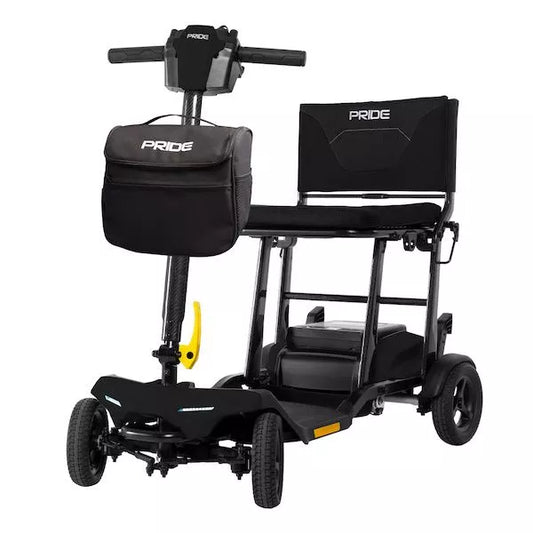
How to Transport Mobility Scooter: 2026 Guide

Deciding how to transport a mobility scooter really comes down to a few key factors: the size of your scooter, the type of vehicle you drive, and how much lifting you're willing (or able) to do. Your options range from simply stowing it in your car to using an external carrier or even a fully automated lift.
Choosing the Right Transport Method for Your Scooter
Your mobility scooter is a passport to getting out and living life, but figuring out the logistics of taking it with you can sometimes feel like a roadblock. I've seen it time and again—people feel stuck, thinking it's too complicated. The reality is, with the right approach, it’s entirely manageable.
This isn't just about the basics. We're going to walk through the real-world methods people use every day, from simple disassembly for a small travel scooter to powerful vehicle lifts that handle all the heavy work. Getting this right is your ticket to more road trips, family visits, and simple errands without the stress.

From Simple to Automated Solutions
The world of scooter transport has an option for almost every person and vehicle. It's all a matter of balancing convenience, your budget, and what you can physically handle.
- Manual Loading: This is the go-to for the lightest, most compact travel scooters designed for disassembly. If you can comfortably lift the heaviest piece (usually around 25-40 lbs), this is the most straightforward and cost-effective method. It’s perfect for quick trips in an SUV or minivan.
- Ramps: A definite step up from pure manual lifting. A portable ramp creates a simple incline, allowing you to roll the scooter into the back of a van or SUV. This dramatically reduces the physical strain, but you still need to guide and control the scooter's weight.
- Vehicle Lifts: For total ease and safety, nothing beats a powered lift. These systems are installed either inside your vehicle (hoist-style) or on the exterior (platform-style) and do all the work at the push of a button.
For example, a hoist-style lift makes loading even a heavy-duty scooter into the back of an SUV a one-person job. You just attach the docking device, press a button, and it swings the scooter right into your cargo area. It lets you focus on your destination, not the hassle of getting there.
Choosing the right transport solution is about more than just moving a piece of equipment. It's about preserving your independence and making sure you can go wherever you want, whenever you want. The right gear removes one of the biggest barriers to staying active.
An Investment in Your Mobility
Learning how to transport a mobility scooter safely is an investment in your equipment and your own well-being. When a scooter is properly secured, it's protected from damage on the road. And when you use the right tools for the job, you protect yourself from the back strain and potential injuries that come from improper lifting.
Taking the time to explore the full range of durable medical equipment available can open your eyes to solutions you might not have known existed. It’s all about finding that perfect match that empowers you to live life on your terms.
Your Pre-Transport Scooter Preparation Checklist

Before you even think about loading your scooter, a few minutes of prep can save you a world of headaches. I’ve seen it all—from minor scratches to serious damage—and most issues could have been avoided by taking these simple steps. This isn't just about folding it up; it's about turning your scooter into a single, solid unit that’s ready for the road.
Getting this prep work right is the foundation of how to transport a mobility scooter safely. It ensures nothing rattles loose, breaks off, or becomes a hazard while you're driving.
Secure the Battery and Power Down
Your first move should always be to deal with the power source. What you do here really depends on the type of scooter you own.
- For travel models: Most of the lightweight, foldable scooters run on removable lithium-ion batteries. Always take the battery out before you lift the scooter. It makes the scooter significantly lighter and protects the battery from all the bumps and vibrations of the road. I usually just place it on the floor of the passenger seat so it's secure.
- For larger scooters: If you have a full-size or heavy-duty model, you're likely working with sealed lead-acid (SLA) batteries that aren't meant to be removed. In that case, double-check that the battery case is latched shut and, most importantly, turn the scooter’s main power switch completely off. It’s always a good idea to flip through your owner’s manual—some manufacturers recommend disconnecting a terminal for long trips, just to be extra safe.
Clear the Decks and Remove Accessories
Your scooter is your personal transport, so it probably has a few things attached to it. But once your car is moving, anything not bolted down can become a projectile. It’s time to clear the decks.
This means taking off everything that can come loose:
- Front and rear baskets
- Cup or cane holders
- Any bags or pouches attached to the armrests or seat
- The key from the ignition
- Personal items like your phone, garage door opener, or water bottle
Road vibrations are surprisingly effective at working things loose. A quick one-minute sweep to remove these items will keep them from getting lost, broken, or becoming a distraction inside your car.
A scooter that's ready for transport should have nothing on it that can fall off. Think of it like preparing a package for shipping—if it's not part of the scooter itself, it should be removed and stored separately inside the vehicle.
Fold and Lock All Movable Parts
If your scooter folds, now’s the time to make it as compact as possible. For popular models like the Go-Go® Folding Scooter, this means collapsing it down completely. If you’re not used to it, practice folding and unfolding it a couple of times at home. You’ll be glad you did when you’re not struggling with it in a busy parking lot.
No matter what model you have, securing the tiller (the steering column) is non-negotiable. Lower it all the way down and make sure it’s locked tight. This stops it from swinging around and potentially damaging your scooter or vehicle interior. Also, check that the seat is either removed or locked firmly in place. The entire goal here is to make sure nothing can shift or move.
One last thing people often forget: check your tire pressure. Properly inflated tires give the scooter more stability, which is especially important when you’re rolling it up a ramp or maneuvering it onto a carrier. A stable base makes a huge difference when you’re using gear like the Roll-A-Ramp® AutoFold Powered Ramp. It’s these small details that add up to a successful and stress-free trip.
Inside the Vehicle: How to Transport Your Mobility Scooter
Bringing your scooter inside your vehicle is, without a doubt, the safest way to travel. It keeps your investment protected from the elements, road grime, and would-be thieves. It’s my go-to recommendation for anyone just getting started. Let's walk through the best ways to get it stowed inside, from simple manual loading to fully automated lifts.
If you have a lightweight travel scooter that disassembles, you might be able to load it by hand. We’re talking about pieces that weigh between 25 and 40 pounds each. If you drive an SUV, van, or even a hatchback with enough room, this can be a straightforward option.
Just remember the golden rule of lifting: bend with your knees, not your back. It sounds simple, but it’s the single most important thing you can do to avoid injury.
Using Portable Ramps for an Assist
Is lifting the whole scooter, or even its heaviest piece, a bit much? A good portable ramp is the perfect middle ground. These ramps create a gentle slope right into your cargo area, letting you simply roll the scooter in. It completely changes the game by taking the strain of lifting off your shoulders.
When you're shopping for a ramp, here’s what really matters:
- The Incline: A longer ramp means a gentler slope, which is much safer and easier to manage. Measure the height from the ground to your vehicle's cargo floor to figure out the right ramp length for a comfortable angle.
- Weight Rating: This is non-negotiable. Your ramp's capacity must be higher than your scooter's total weight. Don't cut it close—always give yourself a solid safety buffer.
- Traction: Look for a ramp with a textured, high-grip surface. You don’t want the wheels slipping, especially if you're loading on a damp day.
A ramp still requires you to guide and control the scooter, but it turns a potentially back-breaking lift into a manageable roll.
Vehicle Lifts: The Gold Standard for Interior Transport
For ultimate ease and safety, nothing beats a professionally installed interior vehicle lift. These powered systems do all the heavy work for you, eliminating any pushing, pulling, or straining. If you have a mid-size or heavy-duty scooter, or simply want the most effortless solution, a lift is a game-changer.
You'll generally find two types of lifts designed for the inside of a vehicle.
Hoist-Style Lifts
Think of a hoist-style lift (also called a crane lift) as a small, powerful crane inside your SUV or van. You simply position the scooter at the rear of your vehicle, attach a docking strap, and use a remote control. The motorized arm lifts the scooter, swings it into your cargo area, and gently lowers it to the floor.
These are incredibly versatile and can be fitted into a huge range of vehicles, from minivans and SUVs to even pickup trucks with a bed cover. They make the entire process of loading and unloading physically effortless.
Platform Lifts
Platform lifts are slick systems designed specifically for minivans and some full-size vans. A platform extends out from the vehicle, creating a small "driveway." You just drive your scooter onto it, secure it, and press a button. The entire platform then retracts smoothly back into the vehicle. It couldn’t be easier.
This is a fantastic option because the scooter is stable and secure from the moment you drive it onto the platform. A great real-world example is the Axis II 400lb Power Inside Lift, which makes the whole process feel almost futuristic.
To help you decide, here’s a quick comparison of the different ways to get your scooter inside your vehicle.
Internal Transport Options Compared
| Method | Best For | Pros | Cons |
|---|---|---|---|
| Manual Loading | Lightweight, travel scooters that disassemble; users who can comfortably lift 25-40 lbs. | No extra cost; no equipment needed. | High risk of injury if done incorrectly; not feasible for heavier scooters. |
| Portable Ramps | Mid-weight scooters; users who can't lift but can guide the scooter's weight. | Reduces physical strain; more affordable than a lift; portable. | Requires manual effort to push/guide; ramp can be bulky to store. |
| Vehicle Lifts | Mid- to heavy-weight scooters; users who want zero physical strain. | Completely effortless and safe; highest level of convenience. | Requires professional installation; highest initial cost. |
Choosing the right method depends on your scooter, your vehicle, and your physical abilities. Each option can be the perfect solution for the right person.
The decision to use a vehicle lift goes beyond mere convenience; it is a significant factor in promoting an active lifestyle. Investing in a system that removes physical barriers to transport can fundamentally change how often you get out and explore.
The numbers back this up. A 2025 study showed that people with vehicle lifts travel 2.5 times more often, directly fighting the social isolation that 40% of scooter users report when facing transport issues. What's more, OSHA data reveals that 45% of caregivers suffer back injuries from lifting scooters manually. By eliminating this risk, vehicle lifts have been shown to increase scooter usage by an estimated 30%.
Outside the Vehicle: How to Transport Your Mobility Scooter
When your vehicle's interior is already spoken for—filled with family, friends, or luggage—an external carrier is your best bet for bringing your mobility scooter along. These devices attach right to your vehicle’s trailer hitch, solving the common headache of what to do when your scooter is just too big to fit inside.
The simplest versions are manual carriers, which typically have a folding ramp. They get the job done, but you'll still be putting in some muscle, pushing or guiding the scooter up the ramp and into place. It’s a solid option, but it doesn't completely remove the physical effort.
If you’re looking for a truly hands-off experience, a powered external lift is the way to go. These are platform-style lifts that take over the entire loading process for you.
The Power of Platform Lifts
Picture this: you drive your scooter onto a platform at the back of your car, push a button, and watch as it’s automatically lifted and secured. That's exactly what a powered external lift delivers. They eliminate all the physical strain and tricky maneuvering from the equation.
A great real-world example is the Pride Mobility Silver Star Backpacker. It perfectly showcases this convenience. You just drive on, and the lift does the rest, raising the platform and locking your scooter down. What used to be a multi-step chore becomes a simple, one-person job that takes only a minute or two.
Before you get sold on any external carrier or lift, there’s one non-negotiable step: checking your vehicle's specs. You absolutely need to know two things:
- Hitch Class: Your vehicle must be equipped with the right class of trailer hitch (like a Class II, III, or IV) to handle the carrier.
- Tongue Weight Capacity: This is the maximum downward force your hitch can safely support. It has to be greater than the combined weight of the lift and your scooter. Never guess on this—overloading a hitch is a serious safety hazard.
This focus on vehicle compatibility is universal for hitch-mounted accessories. In fact, you'll find similar advice in guides for choosing the best bike rack for RV adventures, as the core principles of matching weight capacities and ensuring a secure mount are the same.
Key Features to Look For
Beyond the core lifting function, modern lifts come with some smart features that make a real difference. One of the most useful is a swing-away arm. This brilliant design lets the entire lift, even with the scooter loaded, pivot away from the rear of your vehicle. It gives you full, easy access to your trunk or cargo hatch without having to unload anything.
Another must-have is a durable weather cover. Your scooter is going to be exposed to everything from rain and sun to road grime. A quality, fitted cover is your first line of defense, protecting the electronics and finish to keep your scooter running and looking great.
Have a particularly large or heavy scooter? If a hitch-mounted solution isn't going to work for you, there's another great option. You might want to check out the Scoota-Trailer for a scooter or powerchair. This dedicated trailer tows your mobility device independently, bypassing your vehicle's hitch capacity concerns entirely.
An external lift isn't just a piece of hardware; it's a tool that maximizes both your vehicle's utility and your own freedom. It ensures you never have to choose between bringing your scooter and having enough space for everything else.
The popularity of these transport solutions is soaring for a reason. With North America accounting for a massive 44% of the global mobility scooter market, the need for safe, efficient transport options is more critical than ever. A typical platform lift can handle up to 400 pounds, suiting most full-size scooters, while some heavy-duty carriers support between 500-750 pounds.
Better yet, studies have shown that using a lift can reduce the risk of injury from manual loading by an estimated 85% and cut down transport time by 60%. This transforms a difficult task into a simple job you can finish in under two minutes. You can dig deeper into the data by reading a full analysis of the global mobility scooter industry.
Properly Securing Your Scooter for a Safe Journey
Getting your scooter loaded is just half the battle. The job isn’t finished until it’s locked down tight for the ride. Honestly, this is the one step you absolutely cannot afford to get wrong. An unsecured scooter can shift, roll, or even break free while you're on the road, creating a dangerous situation for you and everyone else.
Thankfully, the days of wrestling with complex, unreliable setups are mostly behind us. We now have everything from time-tested tie-down methods to incredible automated systems that do all the work for you.
This diagram breaks down the basic flow for getting a scooter ready on an external carrier.

From making sure the hitch is solid to loading the scooter and protecting it from the elements, each part of the process plays a role in a safe, damage-free trip.
The Manual Tie-Down Method
If you’re using a simple cargo carrier or putting the scooter inside your vehicle, you'll be securing it yourself with tie-down straps. This is a classic method that works perfectly, but only if you do it correctly.
You'll need a set of four high-quality ratchet straps or cam buckle straps. Forget about using bungee cords—I've seen them snap and fail too many times. They simply don't have the strength to hold a 100+ pound scooter in place during a sudden stop.
Here's how I recommend securing it every time:
- Find Solid Frame Points: Your first move is to find solid metal attachment points on the scooter’s frame. Never, ever hook straps to the plastic body, the tiller, or the seat post. Those parts aren't designed for that kind of force and can easily bend or break.
- Create an 'X' Pattern: To stop the scooter from shifting forward, backward, or side-to-side, you need a four-point lockdown. Run one pair of straps from the front of the scooter outward to anchor points on your vehicle. Then, do the exact same thing from the rear, creating an "X" pattern with the straps.
- Get the Tension Just Right: Tighten each strap until you see the scooter’s suspension compress just a little. That’s the sweet spot. It means the scooter is being pulled firmly into the floor of the vehicle or carrier, which will keep it from bouncing and jostling on bumpy roads.
A quick note on equipment: make sure your vehicle's hitch is compatible with your carrier. Sometimes you need a specific adapter to make it all work, like a Class III Standard Hitch Adapter, to ensure a secure connection.
Automated Securing Systems
Let’s be real—fiddling with straps every time you load up can be a chore. That’s exactly why many modern vehicle lifts now come with automated securing systems. For ease of use and sheer peace of mind, they are the best option out there.
These systems use docking devices or retractable arms that automatically lock the scooter onto the lift platform. For instance, the very popular Harmar AL100 Universal Scooter Lift uses a "hold-tite" arm. You just drive the scooter onto the platform, and the arm swings down to press the scooter firmly in place. No straps, no fuss.
It's not just about making life easier. These automated systems represent a huge step forward in safety. They're engineered to apply the perfect amount of force every single time, which takes human error completely out of the equation.
The numbers back this up. According to the U.S. Department of Transportation, improperly secured devices account for 12% of all mobility transport accidents. But here's the amazing part: data shows that using a vehicle lift with an automatic locking system can reduce that accident rate by a staggering 90%. You can dig deeper into the data in this report on the mobility market.
Common Questions on Transporting Your Mobility Scooter
Even after you've done your homework, a few lingering questions are bound to pop up. That’s perfectly fine—getting your scooter from point A to point B can feel a little daunting the first few times. Let's walk through some of the questions I hear most often so you can handle your transport with confidence.
Can I Just Put My Scooter in Any Car?
This is a big one, and the short answer is no. It all comes down to a matchup between your vehicle's size and your scooter's design.
Some scooters are built for exactly this kind of portability. A lightweight, foldable model like the popular Go-Go® Folding Scooter is a great example. It’s designed to collapse and fit right into the trunk of most sedans. If you want a simple grab-and-go option without needing a special vehicle, this is the way to go.
On the other hand, if you’re working with a full-size or heavy-duty scooter, you’ll definitely need a larger vehicle like an SUV, minivan, or truck. These bigger, more robust scooters are simply too heavy and bulky for a car's trunk. For them, a vehicle lift or an external carrier is pretty much a necessity.
A word of advice from experience: always measure your vehicle’s cargo area before you buy a scooter. Compare those numbers to the scooter's folded dimensions and weight. Trying to fix a mismatch after the fact is a common and costly headache.
What Are the Rules for Flying with a Mobility Scooter Battery?
Getting through airport security with a scooter battery is all about preparation. The airlines follow FAA guidelines, and they are extremely specific about batteries for safety reasons.
The rules you'll face depend entirely on the type of battery you have:
- Lithium-ion Batteries: You’ll almost always be required to remove these from the scooter. Plan on carrying them with you into the cabin. They also have a size limit—typically, they can’t exceed 300 watt-hours (Wh).
- Non-spillable (SLA/Gel) Batteries: These can usually stay installed in the scooter during transport. You just need to make sure you declare the scooter and its battery type when you check in for your flight.
If you’re planning a trip, it pays to do your research on what makes for good airline-approved mobility scooters. The best thing you can do is call your airline at least 48 hours before you fly to confirm their exact policy. Keep your scooter’s battery specification sheet handy, too—it can save you a lot of time and trouble at the check-in counter.
How Do I Know if a Vehicle Lift Is Compatible?
Figuring out if a specific vehicle lift is the right fit for your setup boils down to a three-part check. You need to confirm compatibility between:
- Your vehicle’s make, model, and year.
- Your vehicle's trailer hitch class (if you're looking at an external lift).
- Your scooter’s total weight and its dimensions.
Thankfully, you don't have to guess. Reputable lift manufacturers provide compatibility charts or online tools that do the work for you. You just plug in your vehicle and scooter details, and it will show you which models are a safe match. For instance, if you have your eye on an external carrier like the Challenger Mobility J500, you have to make sure your vehicle has the right hitch (like a Class II or III) to handle the combined weight of the carrier and your scooter.
I always recommend professional installation. It’s the only way to be certain the lift is mounted securely and functions properly with your specific vehicle and scooter. It’s a small investment for major peace of mind.
Do I Need a Professional Service for a Long-Distance Move?
For a big cross-country move, my advice is to seriously consider a professional service that specializes in moving medical equipment. If you don't already own a suitable vehicle and lift, this is often the simplest and safest option. They take care of everything—from securing the scooter correctly to ensuring it's protected—so you don't have to worry.
But what if you've already invested in a quality vehicle lift from a trusted brand like Harmar or Pride Mobility? In that case, you can absolutely handle the transport yourself. If you're comfortable operating the lift and know how to tie the scooter down securely, there's no reason to spend the extra money. It really just depends on your comfort level, the value of your scooter, and how much you want to manage during your move.
At Top Mobility, we're here to help you find the perfect solution for your active lifestyle. From compact folding scooters to powerful vehicle lifts, our team can answer all your questions and make sure you get the right equipment for your needs. Explore our complete collection of mobility transport solutions today!
Refined using Outrank