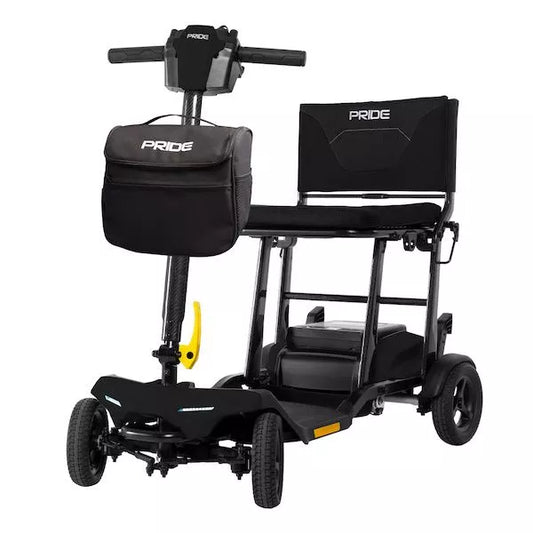
Scooter Battery Replacement: Boost Your Range Today

When your scooter starts acting up, the battery is almost always the first suspect. If it feels like it’s lost its get-up-and-go, or the range just isn't what it used to be, chances are the batteries are on their way out.
Recognizing When You Need a Battery Replacement
Your mobility scooter is your ticket to freedom, so a failing battery isn't just an inconvenience—it's a real problem that can leave you stranded. The good news is that batteries rarely die without giving you some warning signs first. Most performance issues that seem complicated often trace back to this one simple component.

Learning to spot these clues early on can save you the headache of a scooter that just won't go. It really comes down to noticing the small, day-to-day changes in how your scooter performs.
Common Symptoms of a Dying Battery
Think of your battery like the heart of your scooter. As it ages, it just can't pump out the power like it used to. You’ll start to see a few tell-tale signs that it’s getting tired.
Here's a quick reference guide to help you spot the most common symptoms of a failing mobility scooter battery.
Warning Signs Your Scooter Battery Is Failing
| Symptom | What It Looks Like | What It Means for Your Ride |
|---|---|---|
| Reduced Range | You can't travel as far on a full charge. A trip that used to be easy now drains the battery. | You're more likely to get stranded and can't rely on your scooter for longer outings. |
| Loss of Power | The scooter feels sluggish, especially on hills or ramps it used to handle with ease. | Your scooter struggles under load, making it difficult to navigate varied terrain. |
| Erratic Battery Gauge | The gauge drops from full to low very quickly, or the readings seem unreliable. | You can't trust your scooter's battery level, making every trip a guessing game. |
| Slow Charging | It takes much longer than usual to reach a full charge, or it never seems to fully charge. | The battery can no longer accept or hold a proper charge, a clear sign of degradation. |
Noticing any of these signs? It’s a strong indicator that your battery's service life is coming to an end.
Is It the Battery or the Charger?
Before you rush out to buy new batteries, let's make sure we're blaming the right part. A faulty charger can look a lot like a dead battery because it's simply not doing its job of charging it correctly.
A quick check here can save you a lot of time and money. First, look at the charger itself. Are the indicator lights coming on when you plug it in? Do they switch from red (charging) to green (charged) after the appropriate time? If the lights are dead or never change, the charger is the likely culprit.
If the charger seems okay, you can test the batteries with a multimeter after a charging cycle. A healthy 12V battery should read above 12.6 volts. A reading well below that points to a bad battery. But if the batteries test fine and still won’t hold a charge, you might just need a new charger. Trying a compatible replacement like this 24V 5Ah Lead-Acid Battery Charger is a great next step.
Understanding Battery Lifespan Expectations
How often you’ll face this issue depends entirely on the type of battery your scooter uses. The two main players are Sealed Lead-Acid (SLA) and Lithium-ion, and they have very different lifespans.
-
Sealed Lead-Acid (SLA) Batteries: These are the classic, dependable choice found in many scooters. They're affordable and get the job done, but you can generally expect them to last about 12-18 months with regular use or roughly 300 charge cycles.
-
Lithium-ion Batteries: This is the newer technology. While they cost more upfront, they are much lighter and can last 3-5 years or even longer, making them a smarter investment in the long run.
Recent battery innovations have been a game-changer. As noted in market research from gminsights.com, modern lithium packs can deliver 500-1000 charge cycles, a massive jump from the 200-300 cycles of lead-acid. For users in the US and Canada, this can slash long-term costs by up to 40%, making battery replacements a far less frequent concern.
Choosing the Right Replacement Battery
Getting the right replacement battery is easily the most important part of this whole process. This isn't just about getting your scooter moving again; it’s about making sure it runs safely, performs like it should, and that the new batteries last. Think of it like this: putting the wrong battery in a scooter is like putting diesel in a gasoline car. It's just not going to end well.
You’re basically looking at two main paths: the classic Sealed Lead-Acid (SLA) battery or the newer, high-performance Lithium-ion option. Each has its place, and the right choice for you will really come down to your budget, how you use your scooter, and what you expect from it.
SLA vs. Lithium-Ion: A Direct Comparison
For years, Sealed Lead-Acid (SLA) batteries have been the workhorse of the mobility world. They’re dependable, you can find them anywhere, and they’re easier on the wallet upfront. They come in two main flavors, AGM (Absorbent Glass Mat) and Gel. Both are sealed tight, non-spillable, and FAA-approved for air travel, which is a huge plus. AGM batteries are fantastic for delivering a strong burst of power, while Gel batteries tend to last a bit longer and handle vibrations better.
Then you have Lithium-ion batteries. They're the new kid on the block, and while they do cost more initially, the long-term value is hard to argue with. They are remarkably lighter, last significantly longer, and deliver consistent power from a full charge right down to empty.
We're seeing a massive shift toward lithium in the mobility industry. A big reason is that the price has dropped dramatically. Modern lithium batteries are now 50-70% lighter and can last 2-3 times longer than the old lead-acid ones. This has made long-range scooters a reality for many more people.
This drop in cost means you can get top-tier performance that was once out of reach, completely changing what people expect from their scooter's range and daily convenience.
Decoding Your Battery's Specifications
Before you can even think about buying, you have to play detective and figure out what you need. Your scooter's manufacturer picked the original batteries for a very specific reason—they are perfectly matched to the scooter's motor, controller, and electrical system. The two numbers you absolutely must know are Voltage (V) and Amp-Hours (Ah).
- Voltage (V): This is the battery's electrical "pressure." Matching this is non-negotiable. Putting in a battery with the wrong voltage can, and often will, fry your scooter's expensive electronics.
- Amp-Hours (Ah): This is the battery's fuel tank. A higher Ah number means you can go farther on a single charge. You can often upgrade to a battery with a higher Ah for more range, as long as it physically fits inside the battery compartment.
You’ll find these specs printed right on the side of your current batteries. Look for a label that says something like "12V 35Ah." Most scooters use two 12V batteries wired in a series to create a 24V system, and you should always, always replace them as a matched pair.
Finding a Guaranteed Compatible Battery
Once you have your specs, the next hurdle is finding a replacement that is 100% compatible. It’s not just about the voltage and amp-hours. The physical size and the type of terminal connectors are just as crucial. A battery that's a half-inch too tall won't fit, and one with the wrong terminals is a non-starter. This is where a lot of DIY projects hit a frustrating wall.
To take all the guesswork out of it, a specialized tool is your best friend. For example, the Top Mobility Parts Finder was designed to solve this exact problem.
This tool lets you punch in your scooter's brand and model, and it immediately pulls up a list of parts, including batteries, that are guaranteed to fit and function correctly. Using a resource like this saves you from making a costly mistake.
Real-World Product Examples
Let's make this practical. Many popular Pride Mobility scooters, for example, are designed to run on a pair of ultra-reliable UPG 12V 35AH AGM Batteries. They're a solid, go-to choice that we see all the time.
On the other hand, if you have a Golden Technologies scooter and you're looking for a serious performance boost, upgrading to a high-output lithium battery can be a game-changer. These batteries are lighter and last longer, which can drastically increase your range and make the scooter easier to lift and transport. You can browse a wide selection of compatible scooter batteries to see what options exist for your specific model and needs.
A Practical Guide to Replacing Your Scooter's Batteries
You’ve got your new batteries—now for the hands-on part. Swapping out mobility scooter batteries might sound intimidating, but it's a job you can definitely tackle at home. I'll walk you through the process, sharing a few tips I've picked up over the years to make it smooth and safe.
First things first, let's get your work area ready. A few minutes of prep work can prevent almost every common mistake.
Setting Up for a Safe Swap
Safety is non-negotiable when you're dealing with electrical components. We need to make sure your scooter is completely powered down and disconnected from everything. Don't skip these steps.
- Kill the Power: Turn the scooter off and, just to be sure, pull the key right out of the ignition. This prevents any stray power from surprising you.
- Unplug Completely: Disconnect the charger from the scooter and the wall outlet. Your scooter should be totally isolated.
- Find a Good Spot: Choose a workspace that's dry, clean, and well-lit. A garage or even a covered patio works great—you just need enough room to work without feeling cramped.
Taking these simple precautions creates a safe, controlled environment where you can focus on the task at hand.
Here's a pro tip that has saved me countless headaches: Before you disconnect a single wire, pull out your phone and take a quick photo of the battery wiring. It gives you a perfect, color-coded map of how the red (positive) and black (negative) cables are connected. Trust me, this little snapshot eliminates all the guesswork when it's time to hook up the new batteries.
Disconnecting and Removing the Old Batteries
With your workspace prepped, it's time to get the old batteries out. The trick here is to follow a specific order to avoid causing a short circuit. Always start with the negative terminal.
Most scooters keep their batteries in a plastic case or tucked away under a shroud on the floor deck. You'll probably just need a Phillips head screwdriver to get the cover off and a small wrench or socket for the terminal bolts.
Once you can see the batteries, here’s what you do:
- Disconnect the Negative (Black) Cable: Grab your wrench and loosen the nut on the terminal with the black wire. Slide the cable off the battery post and tuck it out of the way so it can't accidentally touch anything.
- Disconnect the Positive (Red) Cable: Now, do the exact same thing for the red wire. Loosen the nut, slide the cable off, and move it aside.
- Lift the Batteries Out: Be ready for the weight. Mobility scooter batteries can be surprisingly heavy, often weighing 15 to 30 pounds each. Bend at your knees, not with your back, and carefully lift them out of the compartment.
After the old batteries are out, it's a good idea to wipe down the battery tray and get rid of any dust or debris. A clean compartment helps the new batteries sit securely.
Before we move on, this image is a great recap of the selection process you just went through—a handy reminder of why matching specs and battery types is so important.

It really drives home how using your scooter's model info helps you find that perfect power source, which is the foundation for a successful replacement.
Installing Your New Batteries
You're in the home stretch now. Putting the new batteries in is pretty much the reverse of taking them out, but there’s one critical difference in the connection order. This time, we connect the positive terminal first.
Go ahead and place your new batteries into the clean compartment. Make sure they're facing the same way the old ones were—and if you're unsure, just check that photo you took earlier.
Follow This Reconnection Sequence:
- First, connect the positive (red) cable to the positive (+) terminal on your new battery. Slide the connector onto the post and tighten the nut until it's snug. Don't go crazy and overtighten it, though.
- Next, attach the negative (black) cable to the negative (-) terminal. Tighten this nut down firmly. A loose connection is one of the top reasons for poor performance, so make sure it's secure.
- Finally, give both connections a gentle wiggle. They shouldn't move at all.
There's a good reason for this "positive-first, negative-last" rule. It drastically reduces the chance of creating a spark if your metal wrench happens to touch the scooter's frame while you're tightening the positive terminal.
With everything connected and tight, all that's left is to put the battery cover or shroud back on. The physical work is done! But hold on—before you head out for a test ride, you have one final, crucial task. Plug in the charger and give your new batteries their very first full charge. Let it run until the indicator light goes green. This initial charge is essential for conditioning the batteries and setting them up for a long, healthy life.
While changing your own batteries is a great way to save a little money and learn more about your scooter, we get that it’s not for everyone. If you'd rather leave it to the professionals, our expert battery installation service available at Top Mobility is always an option.
How to Properly Dispose of Your Old Batteries
Once you’ve installed your new batteries, the job isn't quite finished. You’re now left with the old ones, and it might be tempting to just toss them in the trash. Please don’t. It’s not just a bad idea for the environment—in most places, it’s illegal.

Mobility scooter batteries, particularly the common Sealed Lead-Acid (SLA) types, are considered hazardous waste. They’re full of nasty stuff like lead and corrosive sulfuric acid. If these end up in a landfill, they can leak and poison the soil and groundwater for years to come.
Why You Can’t Just Throw Them Away
The chemicals inside these batteries are the problem. Whether it's an SLA or a lithium-ion battery, they contain heavy metals and other substances that are perfectly safe when sealed but become serious risks once the casing is compromised. Tossing them in the bin contributes to landfill pollution and wastes valuable materials that could otherwise be recovered.
A single lead-acid battery contains several pounds of lead, a potent neurotoxin. The Environmental Protection Agency (EPA) has strict regulations for their disposal to prevent this lead from contaminating our ecosystems and water supplies. Failing to follow these rules isn't just irresponsible; it can result in fines.
Properly recycling your old batteries protects public health and the environment. It's the final, and most responsible, step in your replacement project.
Finding Local Recycling and Disposal Locations
So, what do you do with them? The good news is, you have plenty of free and convenient options for recycling old batteries. You just have to know where to look.
Here are the most common places that will take your old scooter batteries, usually for free:
- Auto Parts Stores: Big chains like AutoZone, Advance Auto Parts, and O'Reilly Auto Parts are almost always set up to accept old vehicle and scooter batteries for recycling.
- Battery Retailers: Specialty shops like Batteries Plus have excellent recycling programs. They are experts in handling all battery chemistries, including the AGM and Gel types used in scooters.
- Municipal Waste Facilities: Your local town or county likely has a household hazardous waste (HHW) facility. Check their website or give them a call; many host collection days specifically for items like batteries.
Some retailers even have a "take-back" program. When you buy a new battery, they’ll take your old one off your hands right then and there. It never hurts to ask when you're making your purchase. If you’re ever stuck or have questions, our team is always here to help. Just reach out through the Top Mobility customer service page.
The Special Case for Lithium-Ion Batteries
While lead-acid batteries are easy to recycle, lithium-ion versions can be a bit different. They pose a unique fire risk if they get damaged or short-circuited, so they need to be managed by specialized facilities equipped for ion battery recycling.
Before you make the trip, I always recommend calling the recycling center ahead of time. A quick phone call can confirm they accept your specific type of battery, saving you a wasted trip and ensuring you get the job done right from start to finish.
Making Your New Scooter Battery Last Longer
You've just invested in a brand-new battery for your scooter, and you want to get every ounce of life out of it. I get it. The good news is that with a few simple, consistent habits, you can protect that investment and significantly extend its lifespan, ensuring you get maximum mileage out of every charge.
From my experience, the single most important rule is this: charge your batteries after every single use. It doesn't matter if you just zipped down to the corner store or were out for the entire day. Topping off the battery regularly keeps it in prime condition and prevents it from sitting in a discharged state, which is one of the fastest ways to cause permanent damage.
Just as important is using the right tool for the job. Always use the specific charger that came with your scooter or a replacement that is explicitly approved by the manufacturer. I've seen countless new batteries ruined by cheap, third-party chargers. They can overcharge, undercharge, or lack critical safety features, leading to a drastically shorter battery life and even creating a fire risk.
The Impact of Charging and Storage Habits
Your daily habits directly influence how long your battery will last. Think of it like a muscle—it works best when it's treated well and not constantly pushed to its limits. A consistent and proper charging routine is the absolute cornerstone of good battery health.
Where you store your scooter also plays a surprisingly big role. Batteries are sensitive to their environment and absolutely hate extreme heat and cold.
This focus on best practices is more crucial than ever. The electric scooter battery market is projected to skyrocket by USD 19.83 billion between 2026 and 2030. This growth is fueled by smarter battery management systems (BMS) that are already boosting battery lifespans to 3-5 years and cutting failure rates by 35%. That's a huge leap from the 2-3 year replacement cycle many of us have grown used to.
Keeping Your Battery in the "Safe Zone"
Temperature is a silent killer for scooter batteries. If you leave your scooter in a hot car, a sun-drenched porch, or a freezing garage, you're causing irreversible damage to the cells. High temperatures accelerate chemical decay, while bitter cold can permanently cripple the battery's ability to hold a full charge.
The best-case scenario is to store your scooter in a climate-controlled space. A spare room, a hallway, or an insulated garage works perfectly. Simply keeping the battery at a stable, moderate room temperature is one of the most effective things you can do to maintain its performance for the long haul.
Beyond the Battery Itself
Here’s a tip that surprises a lot of people: routine scooter maintenance that has nothing to do with the electronics can directly impact your battery’s lifespan. The most common culprit I see is tire pressure.
When your tires are underinflated, the motor has to work much harder to move you, pulling significantly more power from the battery. This extra strain not only cuts down your range per charge but also puts a heavy load on the battery, wearing it out much faster.
- Check Tire Pressure Often: Make it a monthly habit. The correct PSI is almost always printed on the tire's sidewall.
- Keep Them Topped Off: A simple bike pump is all you need. This tiny bit of effort reduces motor strain and lets your battery breathe a little easier on every trip.
By building these simple habits into your routine, you can make sure your battery replacement pays off for years to come. You'll get better performance, a more dependable ride, and the confidence that comes from a well-cared-for machine.
Common Questions We Hear About Scooter Batteries
Even after a successful battery swap, you might still have a few questions. That's perfectly normal. Over the years, we've heard just about everything, so let's walk through some of the most common queries we get from scooter owners just like you.
Can I Switch My Lead-Acid Batteries to Lithium?
That's a popular question, and the short answer is yes! Moving from a traditional Sealed Lead-Acid (SLA) battery to a modern Lithium-ion one is a fantastic way to breathe new life into your scooter. But—and this is a big "but"—it's not a simple drop-in replacement.
To pull off this upgrade, you have to match a few key things. The new lithium battery needs to have the same voltage rating and be small enough to physically fit in the battery compartment. The terminal connectors have to line up, too. Most importantly, you must buy a new charger made specifically for lithium batteries. Using your old SLA charger is a serious safety risk that can damage the battery and even cause a fire.
Upgrading to lithium can honestly feel like getting a whole new scooter. The weight drops dramatically, the range gets a serious boost, and the power feels more consistent. Because the technical details are so important, we always recommend using a tool like our Parts Finder or talking with an expert to be 100% sure you're getting a compatible set.
How Do I Figure Out the Right Battery Size for My Scooter?
Finding the right size is usually easier than people think. The most straightforward way is to just look at the batteries you're taking out. The manufacturer prints all the essential specs right there on the casing.
You're looking for a code that looks something like "12V 35Ah." This little string tells you everything you need to know:
- Voltage (V): This is the battery's electrical "pressure." In this case, it’s 12 volts.
- Amp-Hour (Ah): This is the battery's "gas tank" or capacity. Here, it’s 35 amp-hours.
If the label is scuffed and unreadable, your scooter's owner's manual will have the same information. And here's a critical pro-tip: most scooters use two batteries wired together to create a 24-volt system. You must replace both batteries at the same time with a new, matched pair. Mixing an old battery with a new one is a recipe for disaster—it'll kill both batteries prematurely and can even harm your scooter's electronics.
What's the Real Difference Between AGM and Gel Batteries?
This is a great question because, on the surface, they seem almost identical. Both AGM and Gel are types of Sealed Lead-Acid (SLA) batteries. They're both maintenance-free, won't spill, and are FAA-approved for air travel, which is why they're the standard for mobility scooters. The difference is all about what's going on inside.
- AGM (Absorbent Glass Mat): Think of a sponge. In an AGM battery, the acid is soaked up by fine fiberglass mats wedged between the lead plates. This design makes them great at delivering quick, powerful bursts of energy, which is perfect for accelerating or tackling steep inclines.
- Gel: Here, the acid is mixed with a silica agent that turns it into a thick, un-spillable gel. Gel batteries are champs when it comes to handling deep discharges and are incredibly resistant to vibrations.
Honestly, for most scooter riders, either type will work just fine. The best rule of thumb is to stick with whatever technology the manufacturer put in there originally. At Top Mobility, we stock a huge variety of both AGM and Gel batteries from top-tier brands like UPG and MK Battery, so you can always find the perfect match.
Why Does My Brand-New Battery Feel So Weak?
It’s definitely unsettling to put in fresh batteries only to feel like they're underperforming. Before you panic, know that this is usually completely normal. New scooter batteries need a "break-in" period to get up to full strength.
It's a lot like breaking in a new pair of hiking boots. The battery's internal chemistry needs a few cycles to get fully activated. This typically takes between 5 and 10 full charge-and-discharge cycles. During this initial phase, you might notice your range is a little shorter than what you were expecting.
To get them broken in properly, give your new batteries a full, uninterrupted charge right out of the box. After every ride—no matter how short—plug the scooter back in and leave it until the charger light turns green. If you've done this about 10 times and the performance still seems sluggish, it's time to investigate. Check that all your cable connections are screwed on tight and confirm you're using the right charger. If the issue continues, it's best to give customer support a call.
At Top Mobility, our goal is to give you the confidence and the components you need to stay independent. Whether you're tackling a battery replacement or searching for your next scooter, our team is ready to help. See everything we have to offer at https://www.topmobility.com.