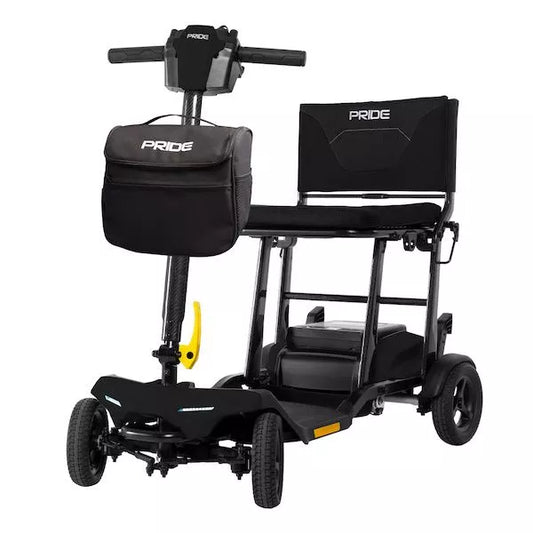
Your Guide to Buying a Foldable Electric Wheelchair

Have you ever had to turn down a last-minute invitation or a spontaneous day trip because of your mobility device? A foldable electric wheelchair is designed to solve that exact problem. It’s a battery-powered chair built from the ground up to be lightweight and easy to collapse, giving you back your independence on your own terms.
Regain Your Freedom with Portable Mobility

The single biggest advantage of a foldable power chair is the effortless freedom it offers. Think of it like the difference between an old, stationary desktop computer and a modern, powerful laptop you can slip into a bag. While traditional power chairs are certainly robust, they are often incredibly heavy and bulky. This usually means you need a special vehicle lift, making spur-of-the-moment travel almost impossible.
A foldable model completely changes that equation. These chairs are engineered for people with an active lifestyle, blending the reliable performance you need with the convenience you want.
The Power of Portability
The real magic is in their design. By using lightweight but incredibly strong materials like aircraft-grade aluminum, manufacturers have created frames that can handle daily use but are still easy for a person to lift. This means they can be folded in just a few seconds—often in a single step—and placed into the trunk of a typical car, tucked away in a closet, or even checked for a flight.
This portability opens up a world that might have felt out of reach. Suddenly, you can:
- Go on spontaneous outings: Head to the park, a local mall, or a friend’s house without complicated transportation plans.
- Travel with less stress: Many models come with FAA-compliant batteries, which makes the whole process of flying much simpler.
- Store it anywhere: Their small folded size is a perfect fit for apartments, smaller homes, or cruise ship cabins where every inch of space counts.
Better mobility often leads directly to improved accessibility, empowering you to navigate different places with more confidence and ease.
What This Looks Like in the Real World
Picture yourself joining the family for a weekend getaway. With a chair like the popular Pride Mobility Jazzy Ultra Light, which folds in seconds and weighs only 38 lbs, you’re packed and ready to go in minutes. Or imagine exploring a new city, knowing your chair can easily be stored in the back of any taxi or rental car you use.
A foldable electric wheelchair isn’t just about getting from point A to B. It’s about tearing down the barriers that get in the way of your life experiences. It’s truly an investment in freedom, spontaneity, and staying connected to the world.
This technology empowers you to say "yes" to more things, whether it's attending your grandchild’s baseball game or finally taking that long-awaited vacation. If you're wondering how one of these could fit into your life, take a look at the wide variety of folding power wheelchairs to see just how many options are out there.
Understanding Foldable Wheelchair Technology
So, what exactly sets a foldable electric wheelchair apart from a traditional power chair? The best way to think about it is like the jump from an old, clunky desktop computer to a slim, powerful laptop. It wasn't just about making the parts smaller; it was a complete redesign from the ground up, built for a life on the go.
The whole idea is to strike a perfect balance between everyday power, long-term durability, and true portability. You need a machine that’s tough enough for daily use but still light and simple enough to pack up and transport without needing a special lift or van. This kind of innovation comes down to smart choices in the frame materials, battery tech, and the folding mechanism itself.
Lightweight Yet Strong Frame Construction
It all starts with the frame. To get that blend of strength and low weight, manufacturers have moved on from heavy steel and embraced much more advanced alloys.
- Aircraft-Grade Aluminum: This is the go-to material for most foldable chairs, and for good reason. It has a fantastic strength-to-weight ratio, naturally resists rust, and can be formed into incredibly strong and complex shapes.
- Carbon Fiber: You'll find this on more premium models. Carbon fiber is a step up, being even lighter and stronger than aluminum. It’s exceptionally rigid and does a great job absorbing road vibrations for a smoother ride, which is why a chair like the Pride Jazzy Carbon 27X, an ultra-light power wheelchair is so light and easy to lift.
These materials are the secret sauce. They allow a chair to safely support a person while keeping the overall weight low enough for someone to comfortably lift it into the trunk of a car.
The Brains and Brawn: Smart Battery Design
The battery is the engine of any power chair, but for a foldable model, it has to be both powerful and portable. That’s why the entire industry has rallied around lithium-ion technology.
A key innovation in foldable electric wheelchair design is the use of removable, lightweight, and often FAA-compliant lithium-ion batteries. This not only makes the chair lighter to lift but also simplifies air travel, as the batteries can be easily carried on board.
Take the LiteRider Envy power chair, for example. It uses a smart battery pack that’s designed to be popped in and out in seconds. This does two important things: it makes the chair frame much lighter to lift on its own and lets you fly without a headache. It's amazing how much power they pack in there, too. Many of these batteries give you a range of 10 to 15 miles on one charge—plenty for a full day of shopping, visiting, or exploring. If you want to dive deeper, we have a whole guide on the best lightweight power wheelchairs available today.
Intuitive and Quick Folding Mechanisms
Of course, the "fold" is what makes or breaks this type of chair. The engineering here is all about making it fast, easy, and intuitive. You shouldn't need a toolbox or a lot of muscle to get your chair ready for transport.
Most models rely on one of two simple methods:
- One-Step Lever or Latch: A lot of chairs have a single latch or release handle. Give it a pull or a push, and the frame collapses into a locked, compact shape in just a few seconds. This is perfect for people who are folding their chair frequently throughout the day.
- "Suitcase" Style Fold: Some chairs are designed to fold down into a shape that you can then roll behind you like a piece of luggage. This is a game-changer for getting through airports or train stations with ease.
This laser focus on user-friendly design isn't a coincidence. It’s a direct response to the huge demand for better, more convenient mobility. In fact, foldable models are a massive driver in the electric wheelchair market, which is expected to explode from $14.9 billion in 2026 to $38.4 billion by 2036. This incredible growth, highlighted in this detailed industry forecast, shows a clear shift toward products that fit the active lifestyles people want to lead.
How to Choose Your Ideal Foldable Wheelchair
Picking out a foldable electric wheelchair is an exciting moment—it's a huge step toward more freedom and independence. But to get it right, you need to match the chair’s features to your own life. This is about more than just a color choice; you're finding a true partner in mobility.
By digging into a few key specifications, you can make sure the model you choose will fit seamlessly into your day-to-day routine. After all, the whole point of a foldable chair is its portability, so its weight and size are what matter most. These numbers will tell you exactly how easy the chair will be to manage.
A chair that’s simple to lift into a car or tuck away in a closet is a chair you'll actually use and love.
Decoding the Specifications Sheet
When you’re looking at a product page, that long list of specs can feel a little intimidating. Let's break down the most important numbers and what they actually mean for you.
-
Total Weight (and Lifting Weight): This is the single most important number for portability. Most foldable models weigh between 40 and 65 pounds. Keep in mind, lighter isn't always better, as it can sometimes mean a lower weight capacity or fewer features. Pay close attention to the "weight without batteries," because popping the battery out can often shave 5-10 pounds off, making it much easier for a spouse or friend to handle.
-
Folded Dimensions (L x W x H): Think of this as the chair's footprint when it's packed up. Before you buy, go out and measure the trunk of your car or the closet where you plan to store it. A compact model like the Golden Technologies Cricket folds down to just 14" x 22.25" x 30.2", making it a great fit for smaller vehicles and tight spots.
-
User Weight Capacity: This is a non-negotiable safety feature. You absolutely must choose a chair that can comfortably support your weight. Standard foldable chairs usually support up to 250-300 pounds, while heavy-duty models can handle 400 pounds or more.
-
Battery Range: This tells you how far you can go on a single charge, typically measured in miles. A range of 10-15 miles is fantastic for a full day of running errands, sightseeing, or visiting family. If you’re a long-distance adventurer, some chairs even offer extended-range battery options.
This flowchart maps out the thought process, from the base materials all the way to the advanced folding tech that makes these chairs so special.

As you can see, finding the perfect chair is all about balancing the frame’s materials with battery power and how easily it folds, all to match your unique lifestyle.
Foldable vs Non-Foldable Power Chairs: Making the Call
To really appreciate what a foldable model offers, it helps to put it side-by-side with a traditional, non-foldable power chair. Each one is built for a different purpose and environment.
A foldable chair is built for spontaneity and travel, easily fitting into your life on the go. A non-foldable chair, in contrast, is designed for all-day support and ruggedness, often serving as a primary mobility solution for those who spend most of their day seated.
The choice often boils down to a single question: Will you be transporting your chair in a regular car, and will you be doing it often? If the answer is yes, a foldable model is almost always the right move.
Design improvements have made these chairs more capable than ever. Recent data shows that lightweight frames (some under 40 lbs) and advanced batteries offering 20+ mile ranges have turned them into true lifestyle enablers. It's a fast-growing category, with the market projected to hit $8.88 billion by 2029, as detailed in this in-depth market report.
A Head-to-Head Comparison
This table highlights the key differences between the two types of chairs. It's a great way to see which one aligns better with your daily activities and travel plans.
Comparing Foldable vs Non-Foldable Power Chairs
| Feature | Foldable Electric Wheelchair | Non-Foldable Electric Wheelchair |
|---|---|---|
| Portability & Transport | Excellent. Folds compactly to fit in most car trunks. No vehicle lift needed. | Poor. Requires a specialized vehicle lift or ramp van for transport. |
| Travel Friendliness | Ideal for air and cruise travel. Many feature FAA-compliant batteries. | Challenging. Difficult to transport for flights or cruises due to size and weight. |
| Weight | Lightweight, typically 40-65 lbs. Manageable for lifting by one person. | Heavy, often 150-300+ lbs. Cannot be lifted manually. |
| Primary Use Case | Outings, travel, and active users who need to transport their chair frequently. | All-day use in and around the home; users who need robust, specialized seating. |
| Storage | Compact. Easily stored in a closet, corner, or vehicle. | Bulky. Requires a dedicated storage space like a garage. |
| Example Model | The Rascal Carbon Cruiser by Mega Motion is a perfect example of a lightweight, easy-to-fold chair. | The Pride Mobility Jazzy Evo 614HD offers maximum stability and is built for daily, heavy use. |
By taking a good look at these points and thinking about your own needs, you can confidently find a foldable electric wheelchair that not only gets you where you need to go but also opens the door to a more active and spontaneous life.
Top Foldable Models for Every Lifestyle

Knowing the specs is important, but the real "aha!" moment comes when you see how those features translate into a real-world chair that fits a specific lifestyle. After all, the perfect chair for a frequent flyer is going to be worlds apart from one that’s ideal for daily errands or for someone needing bariatric support.
Let’s take a look at a few top models and connect the dots. By seeing how they’re designed for different people, you'll get a much better feel for which one could be your new mobility partner.
For the Avid Traveler
If you’ve got the travel bug, every single pound and inch counts. A travel-focused folding chair has to be light, fold up small, and come with airline-compliant batteries. It’s truly built for someone who wants to say "yes" to spontaneous trips and needs a chair that can keep up.
The Pride Mobility Go-Chair is a classic example. It’s famous for its simple, feather-light disassembly. The chair comes apart into five pieces that are incredibly easy to lift and stow, with the heaviest part weighing just 36 pounds. This makes it manageable for almost anyone to handle on their own.
It pairs that portability with a tight 25.5-inch turning radius, which is a huge advantage in crowded airport terminals, narrow cruise ship cabins, and bustling city streets. You can find out more about this popular travel-friendly Go-Chair on our website. It really shows how you don't have to compromise on freedom to get a chair that's easy to transport.
For Everyday Home and Community Use
Maybe your main goal is finding a dependable chair for day-to-day life—getting around the house, running to the store, or visiting with friends. In that case, you'll want a smart blend of comfort, durability, and convenience. These chairs are still easy to transport, but they often have a more robust build for all-day reliability.
The Golden LiteRider Envy really shines in this category. It strikes a fantastic balance between a portable design and rugged performance. While its total weight is a sturdy 96 pounds, it still disassembles into four manageable pieces for the car trunk.
What makes it so practical for daily use are features like these:
- Impressive Range: It can go up to 15.5 miles on a single charge. That’s more than enough for a full day of errands and activities without any battery anxiety.
- Comfort-Focused Design: It comes with a full-size, stadium-style seat and a roomy footplate, which makes a big difference in comfort when you’re in the chair for hours.
- Off-Board Charging: This is a fantastic perk. You can leave the chair in the car and just bring the battery pack inside to charge.
The LiteRider Envy Power Wheelchair is a perfect fit for anyone who needs a reliable daily driver that’s still simple to pack up for a weekend getaway.
The most important question to ask yourself is this: what will be my primary use for this chair? Is it for the occasional trip, or is it my main mobility aid? Your answer will point you toward the right balance of lightweight design versus robust, all-day features.
For Bariatric Users Needing Portability
For a long time, finding a bariatric mobility aid that was also portable was a real challenge. Heavy-duty chairs were, by definition, big and heavy. Thankfully, modern engineering has brought the convenience of folding frames to users who need higher weight capacities.
A standout model here is the Pride Mobility Jazzy Carbon HD Power Wheelchair. This chair is proof that "heavy-duty" and "portable" can absolutely go together.
It supports a high weight capacity of 400 pounds but still has a frame that can be folded down for transport. This is a complete game-changer for bariatric users who refuse to let their mobility options limit their travel plans. With powerful motors and a wide 20-inch seat, it delivers the support and performance you need without leaving portability behind. You can see all the specs on the Pride Mobility Jazzy Carbon HD. For those interested in cutting-edge materials, you might also look into the Pride Jazzy Carbon 27 Ultra Light, an ultra-light power wheelchair that uses a strong carbon fiber frame to combine strength with a sleek, lightweight design.
Mastering Daily Use: Transport and Travel

Getting a foldable electric wheelchair is one thing, but making it a natural part of your everyday life is where the real freedom begins. The true magic of these chairs is how they fit into your world, whether you’re just running errands or finally taking that dream vacation.
This is your hands-on guide to making it all feel like second nature. We'll cover the simple steps for folding your chair, share some pro tips for every kind of travel, and give you a quick maintenance checklist. Our goal is to help you feel confident and show you just how easy life with a portable power chair can be.
Perfecting the Fold and Transport
The signature feature of your new chair is, of course, how quickly and compactly it folds. While every model has its own little quirks, they are all designed to be surprisingly intuitive. Think of it less like a complicated puzzle and more like folding up a high-end baby stroller—it’s just a few simple moves.
A typical folding process looks something like this:
- Power Down and Secure: First things first, always turn the power off. Engage the brakes or locking mechanism so the chair doesn’t decide to roll away from you.
- Remove Accessories: Pop off any loose items like the seat cushion, side bags, or cup holders. On many models, you can also remove the battery pack. This can lighten the lifting weight by a good 5-10 pounds.
- Activate the Folding Mechanism: This is usually a single latch, a lever, or a pair of triggers. A gentle pull or push is all it takes to get the chair to start collapsing.
- Compact and Lock: Guide the chair into its folded position. You'll often hear a "click" that lets you know it's securely locked, creating a neat little package that’s ready to be lifted.
Once it's folded, getting the chair into a car trunk is much more manageable. But if you'd rather skip the lifting altogether, there are some fantastic accessories that can help. For instance, you could look into an HWheelchair Carrier Tilt-N-Tote wheelchair carrier, which handles all the heavy lifting for you.
Tips for Stress-Free Travel
Traveling with a foldable electric wheelchair is a lot simpler than most people think, especially once you know the rules of the road (and the air).
- By Car: Before you even buy, it’s a smart move to measure your trunk space to make sure the chair’s folded dimensions are a good match. I always suggest laying down an old blanket or mat to protect both your car's interior and the chair from scuffs.
- By Bus or Train: Most public transit systems today are incredibly accessible. You can simply drive your chair right on board, park in the designated wheelchair area, and set the brakes.
- By Airplane: This is where a little preparation goes a long way. The airline's main concern will be the battery. The good news is that most foldable chairs use FAA-compliant lithium-ion batteries. Be sure to call your airline at least 48 hours before your flight to let them know you’re bringing a power wheelchair and to double-check their battery policies. You can usually ride your chair all the way to the gate, where the airline staff will take it to be stowed.
A crucial travel tip: When you fly, always remove the joystick controller from the armrest and pack it in your carry-on bag. It's the most delicate part of the chair, and keeping it with you ensures your mobility is good to go the moment you land.
This focus on easy travel is a huge reason the market is booming. Global demand for folding electric wheelchairs is expected to reach an incredible $5.31 billion by 2025, with a powerful annual growth rate of 6.55% projected through 2033. This trend is driven by lightweight designs, often under 50 pounds, that are perfect for FAA compliance. You can read more about these exciting industry growth insights to see just why portability has become so important.
Frequently Asked Questions About Foldable Wheelchairs
Choosing a new mobility aid is a big decision, and it’s completely normal to have a few questions. A foldable electric wheelchair is an investment in your freedom, so you want to be sure you're making the right choice. We've been helping people find the perfect chair for years, and we've put together answers to the questions we hear most often.
We'll cover everything from flying on a plane to how well these chairs hold up day-to-day. Our goal is to clear up any lingering doubts and give you the confidence to pick a chair that truly fits your life and opens up a world of possibilities.
Can I Take My Foldable Electric Wheelchair on an Airplane?
You certainly can. In fact, most modern foldable power chairs are designed specifically with travel in mind, which is a huge plus for anyone with a bit of wanderlust. The main thing airlines are concerned with is the battery.
Under FAA guidelines, lithium-ion batteries are almost always good to fly. The rules are generally straightforward:
- The battery must be under 300 Wh (watt-hours).
- You can usually leave the battery installed in the chair during transport.
- If you have any spare batteries, they need to travel with you in your carry-on bag.
We always tell our customers to call their airline at least 48 hours before the flight. Just let them know you'll be traveling with a power wheelchair and confirm their policies. This one simple phone call can make your entire check-in process smooth and worry-free.
Many of the chairs we carry, like the popular Pride Mobility Jazzy Carbon, come with airline-approved batteries right out of the box to make flying as easy as possible.
Are Foldable Electric Wheelchairs Durable Enough for Daily Use?
Yes, they absolutely are. It’s a common worry that because they're lightweight, they must be flimsy. The truth is, these chairs are built for the real world using incredibly strong materials like aircraft-grade aluminum—the same stuff used to build airplanes because it’s both tough and light.
They go through the same rigorous testing for stability and performance as their heavier, non-folding cousins. So whether you’re navigating a crowded grocery store, rolling down a park path, or just moving around the house, a quality folding chair is more than up to the task. Here at Top Mobility, we make a point to only stock models from brands known for their solid construction, so you know your investment will last.
How Much Does a Foldable Electric Wheelchair Weigh?
Their light weight is what makes them so popular. Most foldable models weigh somewhere between 40 to 65 pounds in total. That's a game-changer when you compare it to traditional power chairs, which can easily top 150 pounds.
One of the smartest design features you'll see is a removable battery. Just by popping the battery out, you can instantly drop the lifting weight by another 5 to 10 pounds. It might not sound like much, but it makes a world of difference when a family member or caregiver is lifting the frame into a car trunk. Some chairs, like the Golden LiteRider Envy, are even designed to break down into lighter, more manageable pieces to make transport even simpler.
What Kind of Maintenance Do These Chairs Require?
One of the best things about foldable electric wheelchairs is how little upkeep they need. They're designed to keep you on the move with minimal fuss. The routine care is simple enough for anyone to handle right at home.
Here's a quick look at what typical maintenance involves:
- Daily: Keep the battery charged. Just plug it in overnight so it’s always ready for your day.
- Weekly: Give the frame, seat, and joystick a quick wipe-down with a damp cloth to keep it looking sharp.
- Monthly: If your chair has air-filled tires, check the pressure. It's also a good idea to glance over the bolts and electrical connections to make sure everything is snug.
Your user manual will have a detailed schedule, of course. You can also find more information on caring for all kinds of durable medical equipment for sale in our other resource guides.
What Is a Typical Driving Range on One Charge?
The driving range—how far you can go before needing to recharge—is what gives you your freedom for the day. For most standard models, you can expect a range of about 10 to 15 miles on a single charge.
This is usually more than enough for a full day of errands, visiting family, or exploring a local festival. If you're a power user who needs to go the extra mile, some chairs offer optional long-range batteries. A great example is the Eagle HD Folding Power Chair, which can travel up to 25 km (about 15.5 miles), giving you that extra juice to go farther without a second thought.
At Top Mobility, we're here to help you find the mobility solution that fits your life perfectly. To see our full collection of foldable electric wheelchairs and other mobility aids, visit us at https://www.topmobility.com today.